Roommates
You're choosing who gets a key to your front door.
Roommate and flatmate searches move fast and start with strangers: a listing, a group post, a burst of messages, a viewing. A Trust Request lets both people become ID Verified, establishing who they actually are, before an address, a deposit or a tenancy is on the table.
✓ Trust Established
Mia is now a NoStranger.
You can now view the information Mia has chosen to share.

★★★★★ IDENTITY VERIFIED
Mia Alvarez
Approx. connection location: Wellington, NZ
Age
29
Gender
Female
First name
Mia
Last name
Alvarez
Identity Verified
These details were verified from a government-issued ID and checked against authoritative records, with a live face check confirming the person completing the verification matches the ID.
You only see what they chose to share. This code can't be used again.
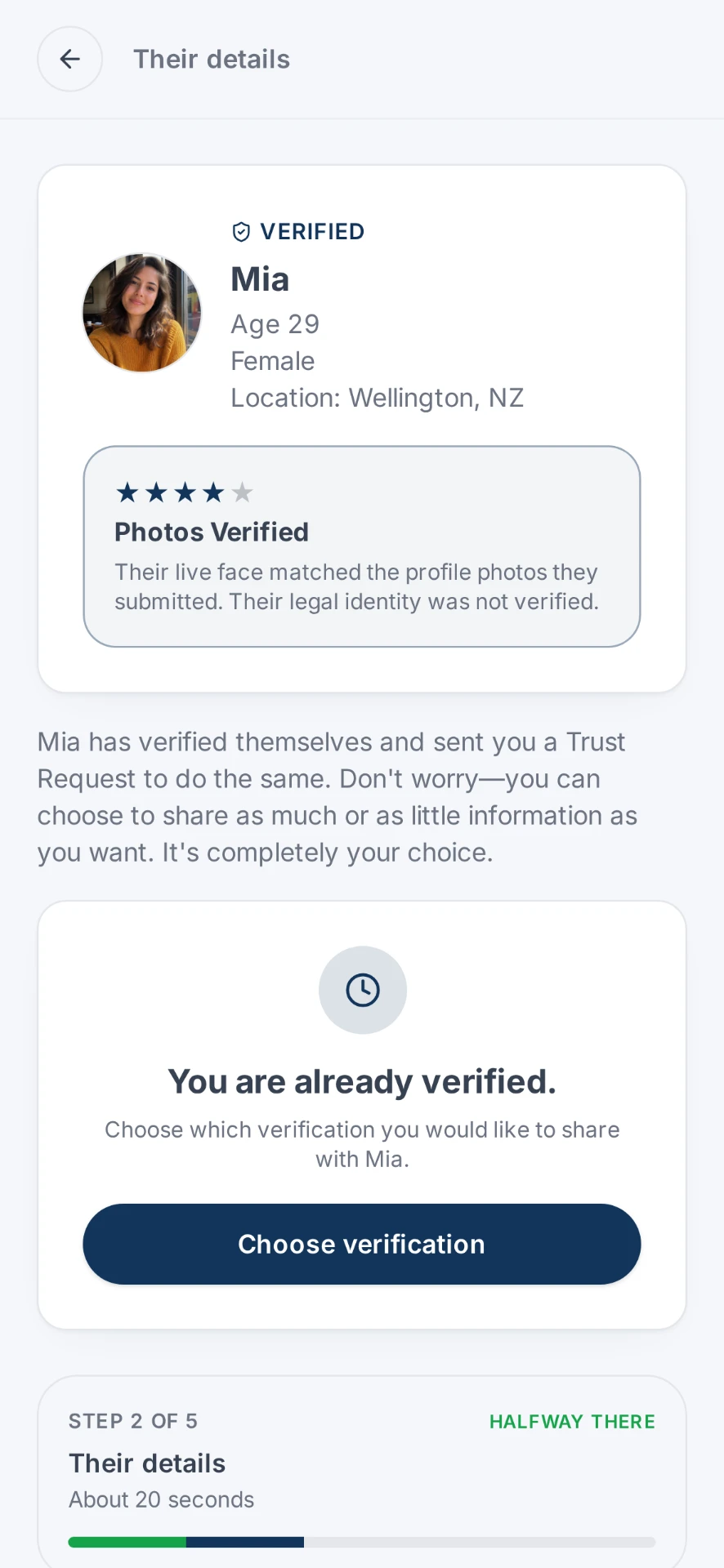
The evidence
Housing searches are a well-documented target for fraud
Figures published by the UK Home Office and the U.S. Federal Trade Commission.
£9m
in reported rental fraud losses across around 5,000 reported cases in England, Wales and Northern Ireland in the year reported; people aged 18 to 29 accounted for 48% of reported cases.
UK Home Office / National Fraud Intelligence Bureau, March 202565,000
rental scams reported to the FTC since 2020, with about $65 million in reported losses. About half of reports in the 12 months to June 2025 began with a fake advert on Facebook.
U.S. Federal Trade Commission, December 2025The gap
A room listing asks two strangers to trust each other within about a week.
Housing groups and listing sites are built for speed. A room goes up, twenty people message, viewings are squeezed into two evenings and somebody is chosen by Sunday. Almost none of that process is designed to establish who anyone is.
Both sides carry real exposure. The household is deciding who will have keys, know their routines and live alongside their possessions. The person looking for a room is often asked to send a holding deposit, share identity documents, or travel to an unfamiliar address alone, sometimes from another country, sight unseen.
NoStrangers does not check tenancy history, references, income, credit or criminal records, and it cannot confirm that an advertiser controls the property.
What it settles is the first question underneath all the others: can this person establish who they actually are?
How it works
How NoStrangers works during a flat or room search
Use it to filter enquiries into viewings, rather than after a decision is made.
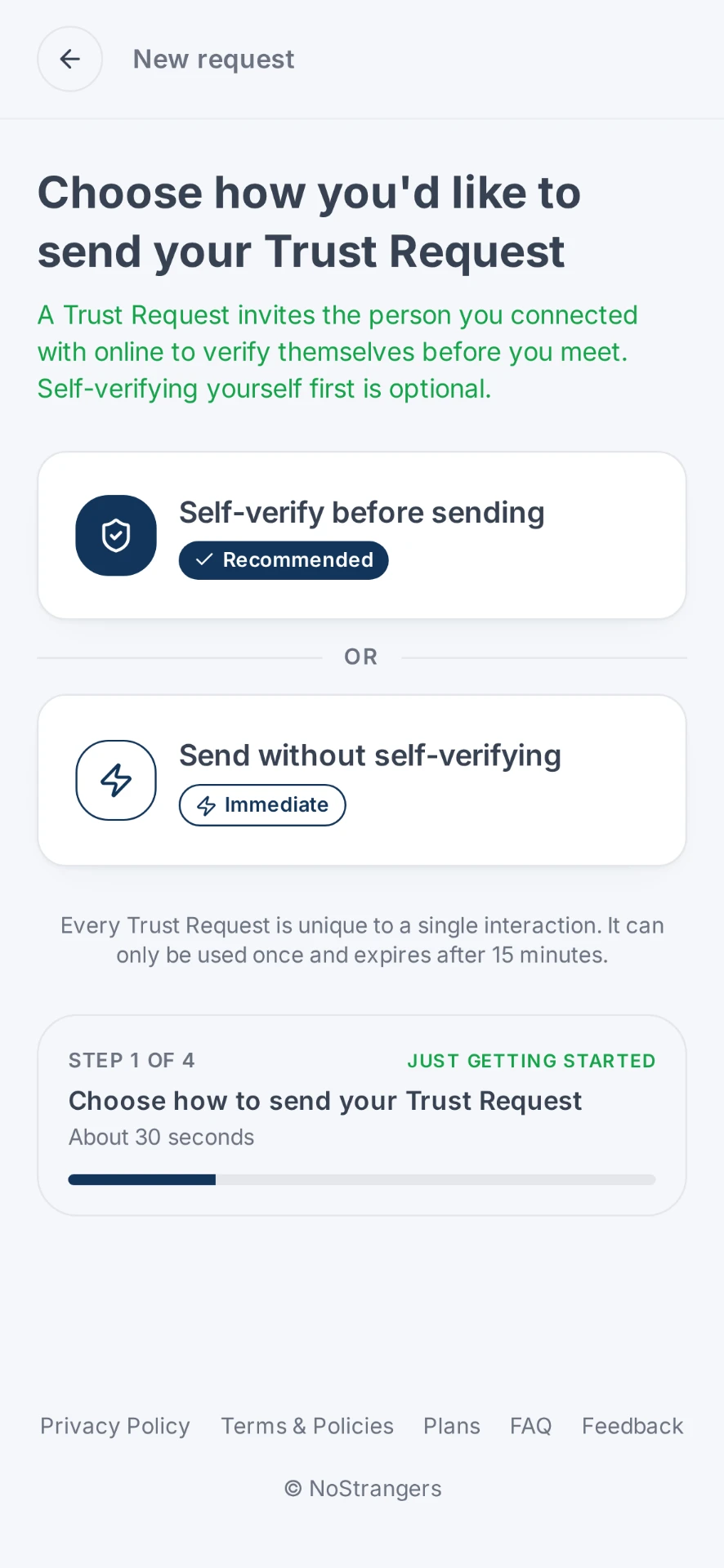
Send a Trust Request
Once you've shortlisted someone, send a unique code through the listing site, the group chat or a message.
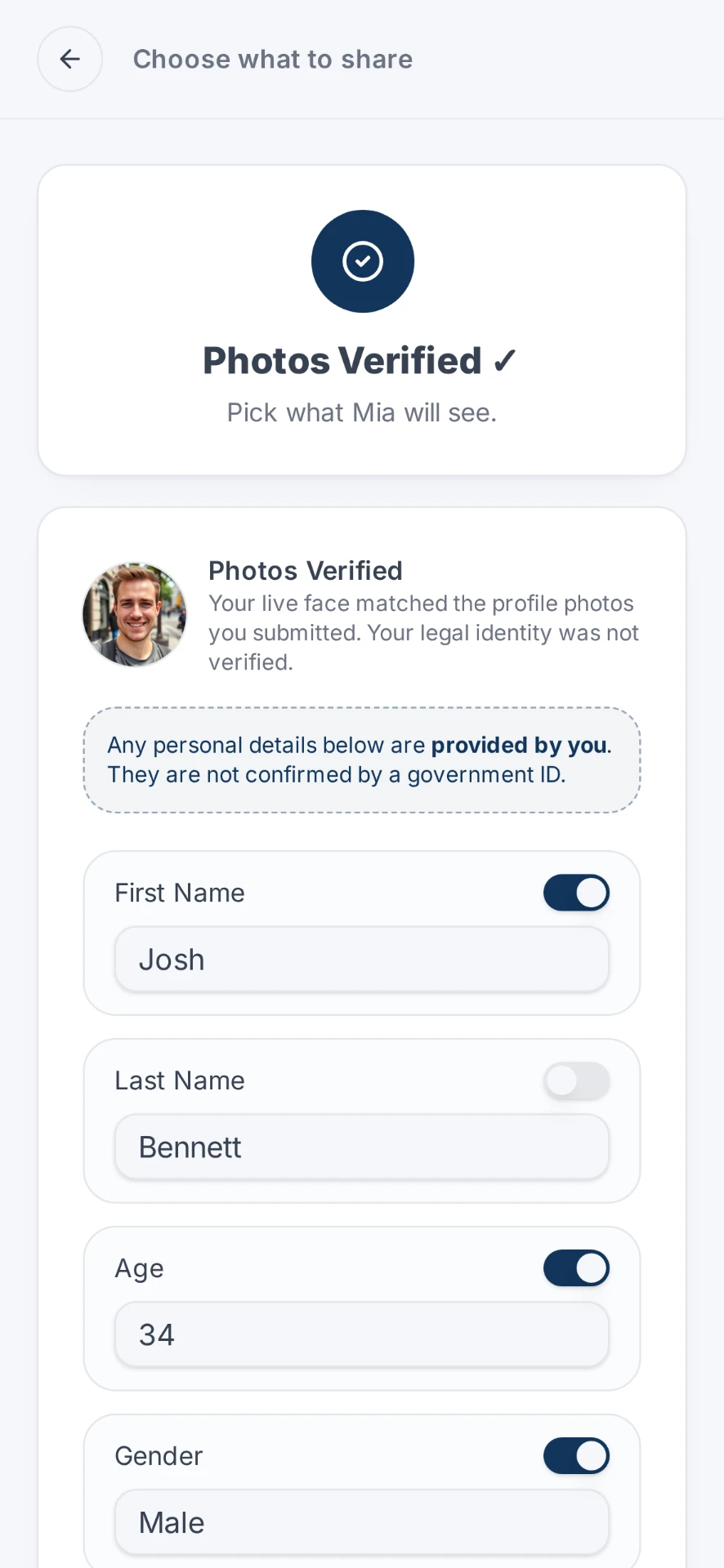
The other person verifies
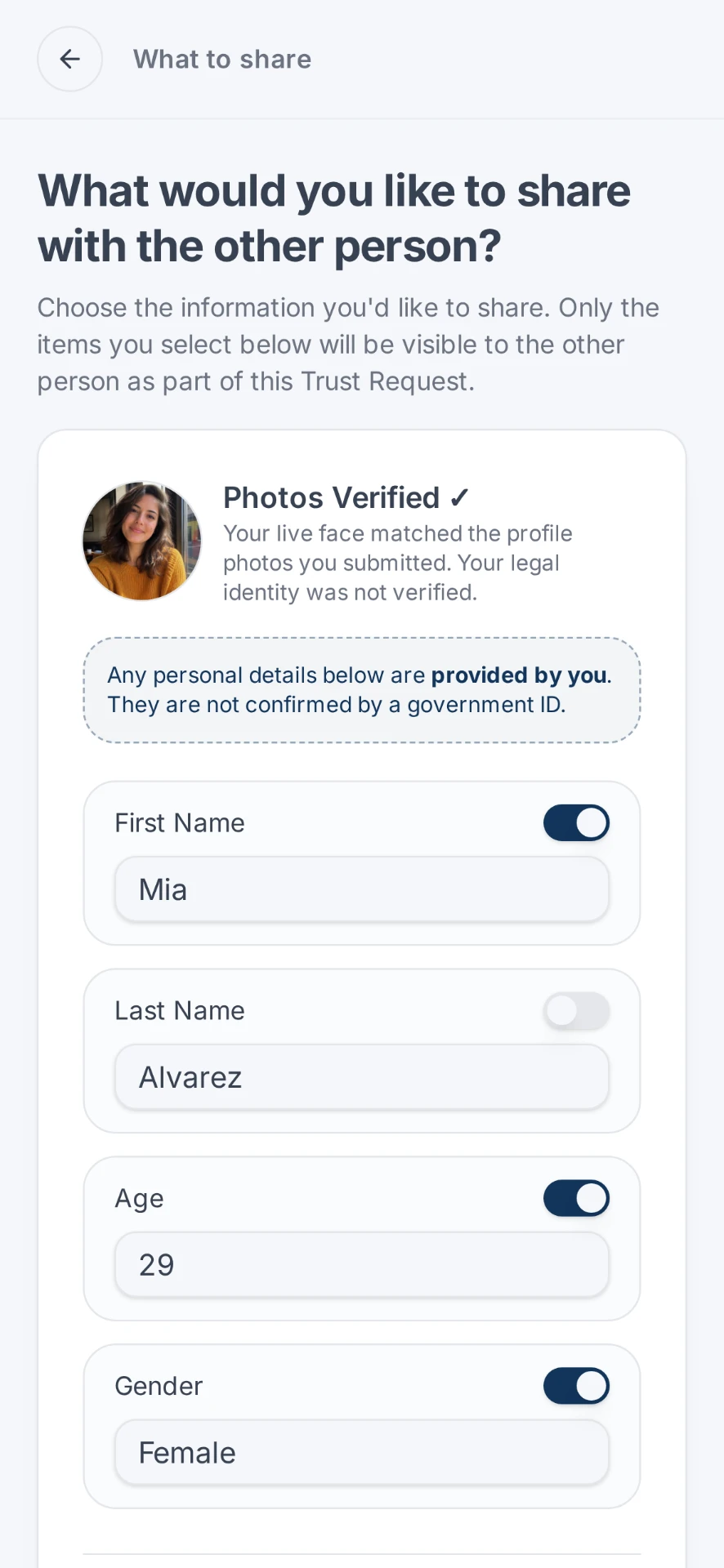
They complete an ID Verified check, government-issued ID plus a live face check, and choose what to share back. Most roommate searches end up going both ways, since whoever receives the request often sends one back before the viewing.
Then share the address
With identity established, arrange the viewing, or the video walkthrough if they're moving from abroad.
✓ Trust Established
Mia is now a NoStranger.
You can now view the information Mia has chosen to share.
★★★★★ IDENTITY VERIFIED
Mia Alvarez
Approx. connection location: Wellington, NZ
Age
29
Gender
Female
First name
Mia
Last name
Alvarez
Identity Verified
These details were verified from a government-issued ID and checked against authoritative records, with a live face check confirming the person completing the verification matches the ID.
You only see what they chose to share. This code can't be used again.
Privacy
Verify the person. Hold back the address.
Only the match is shared. Your private information isn't. They don't see it. Neither do we.
A room search creates a surprising amount of exposure in a few days: your address, your photos of the inside of your home, your phone number, sometimes copies of identity documents. A Trust Request narrows it. Each person chooses what goes into their side, and each sees only the other's selection.
It also means nobody has to send a passport scan into a group chat. Our Privacy Policy sets out how little is involved.
More detail in our Privacy Policy.
When to use it
Real moments in a flatmate search
Before you send the address
Thirty replies to a room ad, and no reason to give all of them your street name.
Viewings alone at home
You'll be letting strangers into your flat, one after another, often in the evening.
A deposit requested up front
You're asked to hold the room with a payment before you've met anyone in person.
Moving from overseas
You can't attend a viewing, so identity is the only concrete thing either side can establish.
Filling a room mid-tenancy
The existing household is choosing who joins them, and everyone in the flat has a stake.
Arranged in a social-media group
No profile history, no reviews, no platform sitting behind the arrangement.
Be clear
What a Trust Request can and cannot establish about a roommate
It answers who. It cannot answer what kind of flatmate they'll be.
It can help you
- Establish that a live person completed an ID Verified check.
- Confirm who someone is, without either of you exchanging ID documents.
- Let either of you send the request, and both verify when that suits the situation.
- Give you a verified name to attach to references or a tenancy agreement.
It doesn't
- Check tenancy history, references, credit, income or employment.
- Confirm that an advertiser owns or controls the property.
- Predict whether someone will pay rent or keep to house agreements.
- Guarantee anyone's safety, or replace viewing in company and a written agreement.
FAQ
Roommate and flatmate verification questions
How do I verify a prospective flatmate or roommate?
Send a Trust Request before the viewing. They complete an ID Verified check: government-issued ID plus a live face check, then choose what to share. It shows whether the person messaging you can establish who they actually are, and it doesn't mean swapping ID documents with each other. It runs in the browser and takes about 90 seconds.
Should I verify before giving out the address?
It is a sensible order. Flat and room listings often attract dozens of enquiries, and there is no reason for every one of them to receive your street address. Verify first, then invite the people you're actually considering.
I'm the one looking for a room. Can I verify the person advertising it?
Yes. Room seekers are the ones most often asked to pay a deposit or holding fee to someone they've never met, so verifying the advertiser is at least as valuable. The same Trust Request works in both directions.
Does NoStrangers run a tenancy or credit check?
No. It does not check tenancy history, references, credit, income, employment or criminal records, and it does not confirm that someone actually controls the property they're advertising. It establishes identity only.
Does this work outside my country?
Yes. Roommate, flatmate and houseshare searches all work the same way: verification happens in the browser with no app download, which is useful when someone is moving from overseas and cannot attend a viewing in person.
Is it awkward to ask?
Less than you'd think. Because verification is mutual and nobody has to hand over documents, most people read it as a sign that you take the arrangement seriously. You're about to share a front door with them.
Does a verified roommate mean they'll be a good one?
No. It tells you that a live person completed verification and how they compare to the identity they used. It says nothing about whether they'll pay rent, keep to agreements or be pleasant to live with, and it cannot guarantee anyone's behaviour.
Related use cases
Verify before the viewing.
About 90 seconds each, before anyone shares an address or sends a deposit.