Marketplace
Establish who you're dealing with before you meet, transact or grant access.
Marketplace listings tell you about an item. They tell you almost nothing about the person behind the account. A Trust Request lets a buyer ask a seller to verify, a seller ask a buyer, or both verify each other, moving the question past "do these photos match?" to "can I establish who this is?", before anyone travels, hands over cash or gives out an address.
✓ Trust Established
Mia is now a NoStranger.
You can now view the information Mia has chosen to share.

★★★★★ IDENTITY VERIFIED
Mia Alvarez
Approx. connection location: Wellington, NZ
Age
29
Gender
Female
First name
Mia
Last name
Alvarez
Identity Verified
These details were verified from a government-issued ID and checked against authoritative records, with a live face check confirming the person completing the verification matches the ID.
You only see what they chose to share. This code can't be used again.
The evidence
Buying and selling between strangers is where reported losses concentrate
Published figures from consumer regulators. Each is quoted as reported by its source.
$8.6m
reported lost to shopping scams in Australia between January and September 2025, from 9,628 reports, a 19% increase in reported losses on the same period in 2024, and the most reported scam type involving financial loss.
ACCC / National Anti-Scam Centre, November 202540%+
of people in the United States who reported losing money to a scam that started on social media said it began when they ordered something they had seen advertised. Shopping was the most reported social-media scam type.
U.S. Federal Trade Commission, 2026 Data SpotlightThe gap
A marketplace account is not the same as a verified person.
Marketplace platforms work hard on listing quality, ratings and payment protection. What they generally cannot tell you is who the human replying to your messages actually is. Accounts get borrowed, resold and taken over, and a new profile with no history looks identical to a genuine first-time seller.
The moment that risk becomes physical is the collection. A buyer arrives at your address, or you drive across town to a stranger's garage, with cash in your pocket and nothing but a profile name to go on.
Conversations also drift off-platform, into messaging or email, where the marketplace's own record and protections no longer follow you.
A Trust Request sits in that gap. With ID Verified, it lets the two people who are actually about to meet establish who each other is, independent of whichever platform introduced you.
How it works
How NoStrangers works for a marketplace deal
Do this once the price is agreed and before anyone commits to a time and place.
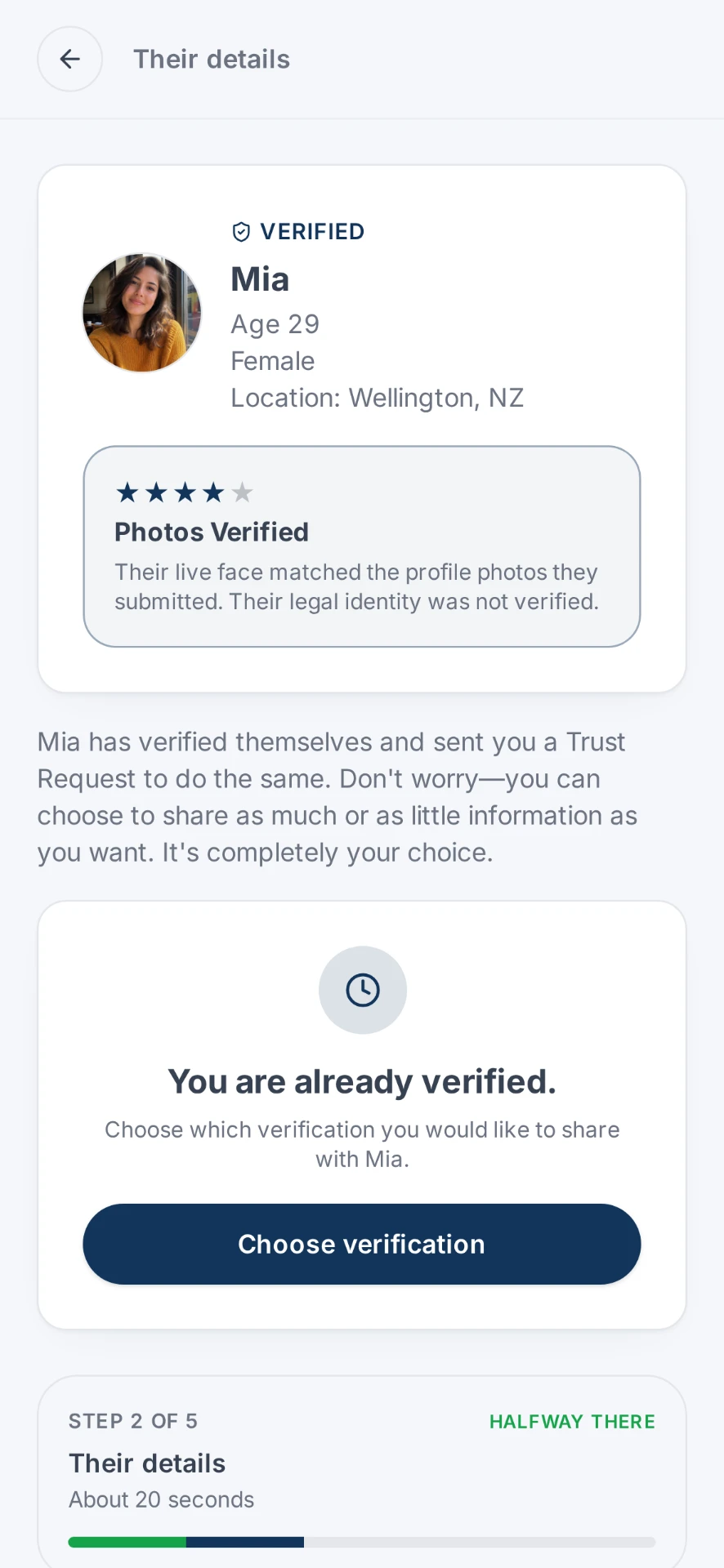
Send a Trust Request
Generate a unique code and send it in the chat you're already using, whether that's the marketplace, a text message or email.
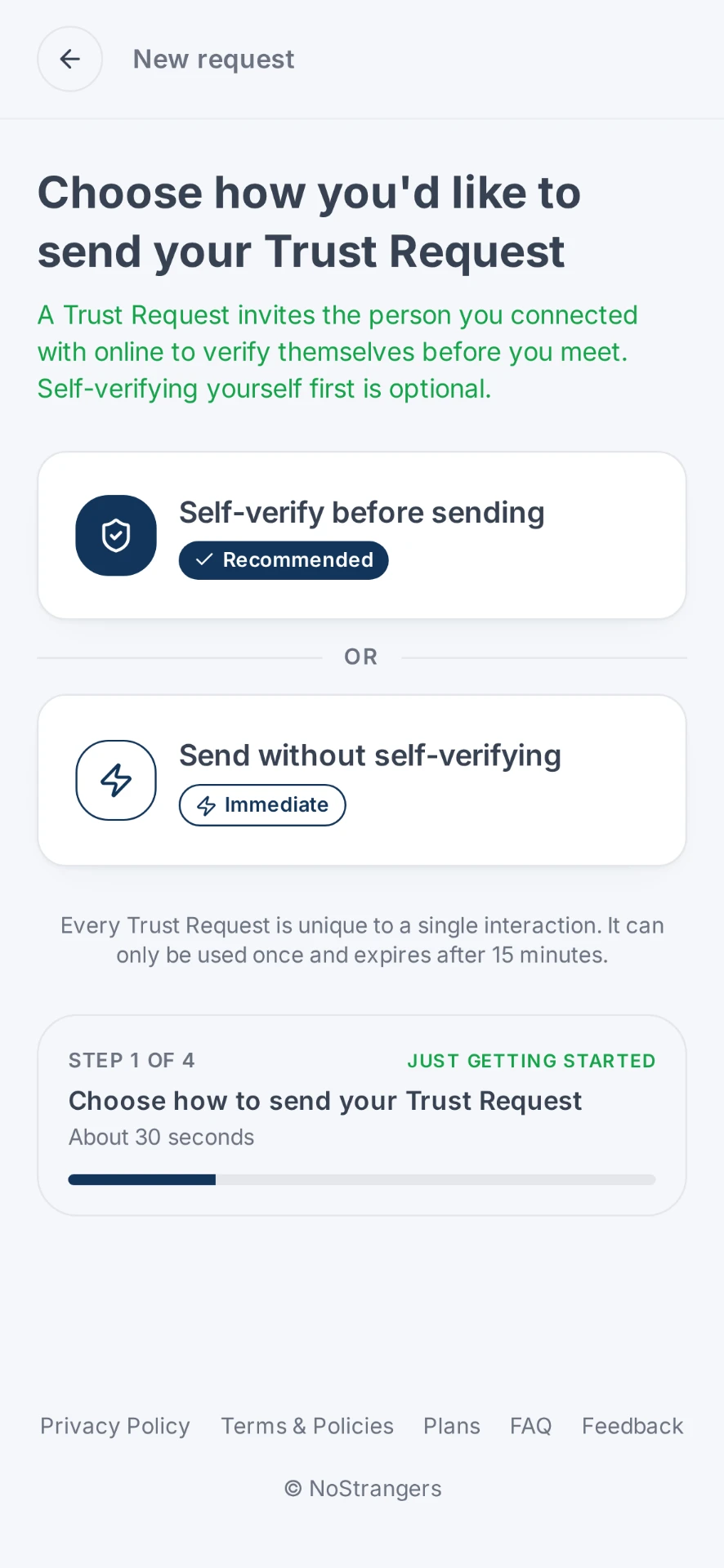
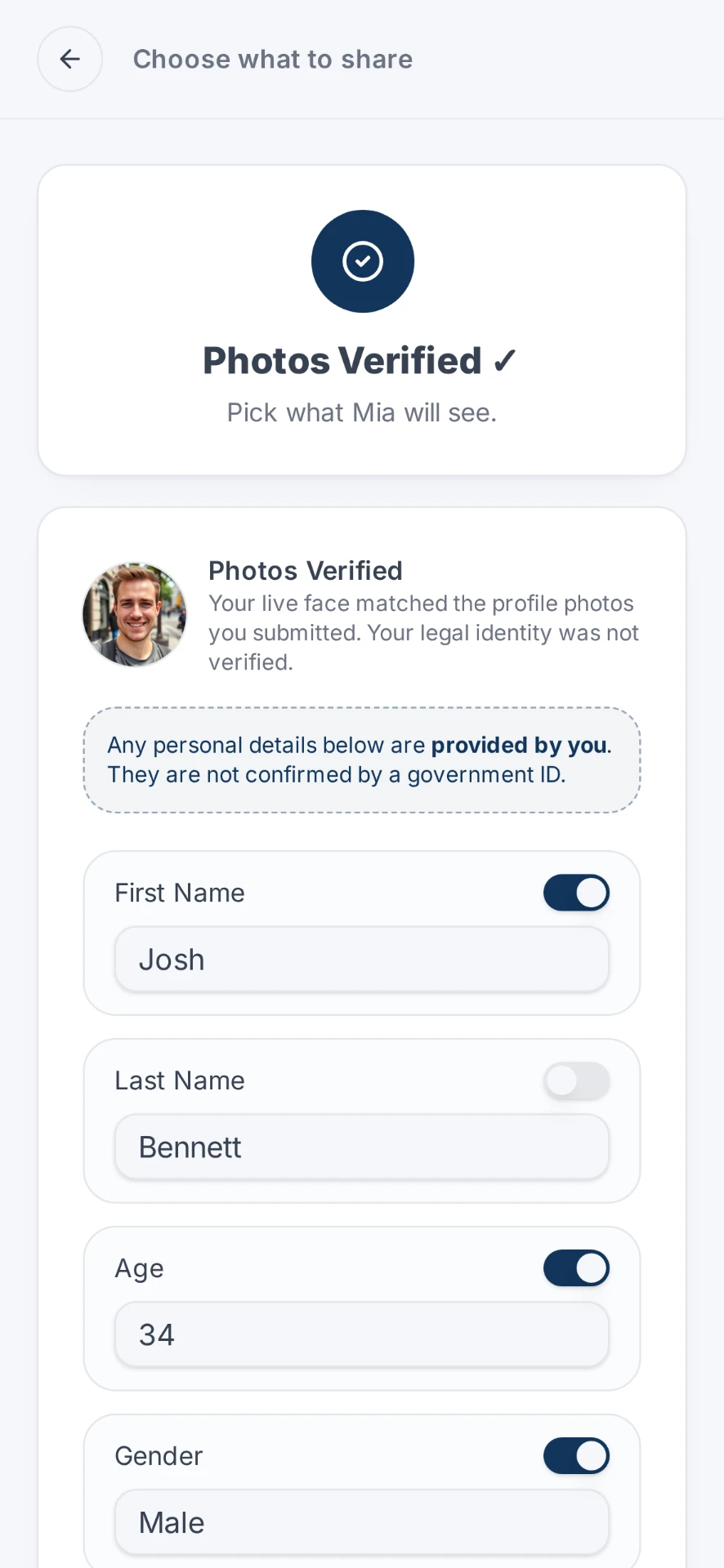
They verify and choose what to share
The other person completes ID Verified: a live face check alongside their government-issued ID, and decides exactly which details to return to you.
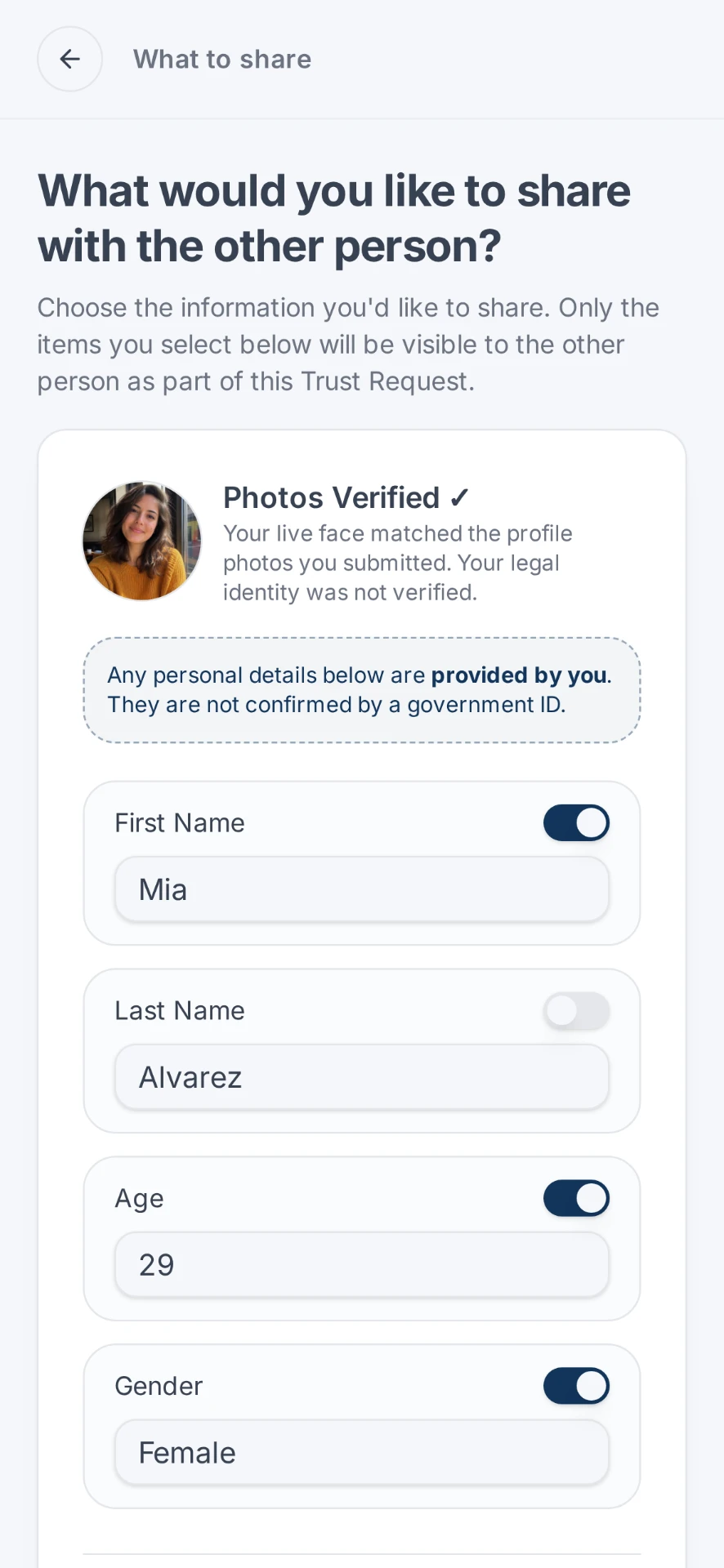
Agree the meet-up
You see the verification result, then decide whether to go ahead with collection, delivery or payment.
✓ Trust Established
Mia is now a NoStranger.
You can now view the information Mia has chosen to share.
★★★★★ IDENTITY VERIFIED
Mia Alvarez
Approx. connection location: Wellington, NZ
Age
29
Gender
Female
First name
Mia
Last name
Alvarez
Identity Verified
These details were verified from a government-issued ID and checked against authoritative records, with a live face check confirming the person completing the verification matches the ID.
You only see what they chose to share. This code can't be used again.
Privacy
Verify the person. Reveal almost nothing.
Only the match is shared. Your private information isn't. They don't see it. Neither do we.
ID Verified does not mean handing your driving licence to someone buying a bookshelf, or exchanging documents with them directly. Each person decides what goes into their side of the request, and each sees only what the other chose to share.
That matters especially for sellers, because a marketplace pickup often means giving a stranger your street address. Establishing who they are first means the address goes to someone you know something real about.
More detail in our Privacy Policy.
When to use it
Where it earns its keep
Someone is collecting from your home
You've sold furniture, a bike or an appliance and the buyer wants to pick it up. You'd rather not give your address to an account you know nothing about.
A brand-new seller account
The listing looks right and the price is fair, but the profile was created last week and has no ratings or history behind it.
A deposit is being asked for
Someone wants money up front to hold the item. Before you send anything, you want to know a verified person is on the other end.
The chat has moved off-platform
You're now in a private message thread, away from the marketplace's record of the conversation, and want an independent way to confirm who you're talking to.
A buyer who keeps changing the plan
Times, locations and payment methods keep shifting. Verification is one fixed thing you can ask for before you agree to anything.
You're travelling to them
You'll be visiting a stranger's home or lock-up with cash. Knowing who agreed to meet you changes the calculation.
Be clear
What a Trust Request establishes in a marketplace deal
It gives you better information about the person. It says nothing about the item, the payment or the transaction.
It can help you
- Establish that a live person completed the verification process.
- With ID Verified, establish who that person is, using government-issued documentation plus a live face check.
- Exchange selected verified details privately, without swapping identity documents.
- Give you a firmer basis for deciding whether to meet, travel or pay.
It doesn't
- Confirm an item exists, is genuine, or matches its description.
- Guarantee delivery, payment or that a deposit will be honoured.
- Guarantee that someone is safe, or predict their behaviour or intentions.
- Replace marketplace payment protections or your own precautions when meeting.
FAQ
Marketplace verification questions
How do I check who a marketplace seller actually is?
Send them a Trust Request before you travel or pay, and ask for ID Verified. They complete a live face check alongside government-issued identity documentation, and you see the result. It tells you a real, live person stands behind the conversation and lets you establish who they say they are, not just that they match their profile photos.
Does NoStrangers check the item is genuine or that it will be delivered?
No. NoStrangers verifies people, not products. It cannot confirm that an item exists, that it is authentic, that its description is accurate or that it will ever be handed over. Continue to inspect goods in person and use the payment protections your marketplace offers.
The buyer wants to continue in a private chat. Is that a problem?
It is common and not automatically suspicious, but it does remove the platform's record of the conversation. A Trust Request works independently of any marketplace, so you can establish who you're dealing with even after the chat has moved to messaging or email.
Someone is coming to my house to collect an item. What should I do?
Ask them to complete a Trust Request first, arrange collection when another adult is home, and keep the exchange at the door or driveway rather than inside. Verification gives you information about who is arriving; it does not replace those precautions.
Do I have to share my ID with a stranger to do this?
No. ID Verified never means exchanging identity documents with the other person. Each person chooses what goes into their side of the request, and each sees only what the other chose to share. A Trust Request is built so two people can establish who they are without swapping documents.
Does the buyer or seller need an account or an app?
No. You send them a unique code, they open it in their browser and complete their side. Most people are done in about 90 seconds.
Can I use this for high-value items?
Yes, and people most often do exactly that. For watches, jewellery, collectibles or a car, see our Luxury Goods and Vehicle Sales pages, which cover the extra care those transactions deserve.
Related use cases
Before the pickup, send a Trust Request.
About 90 seconds, on either side of the deal, for real confidence about who turns up.