House sitting
Before you hand over the keys, be sure who you're handing them to.
House sitting is an extraordinary amount of trust arranged remarkably fast, often between two people who have never met, in different countries, over a handful of messages. Unsupervised access to your home is exactly what ID Verified is for: an ID Verified Trust Request makes identity the one thing that isn't left to instinct.
✓ Trust Established
Mia is now a NoStranger.
You can now view the information Mia has chosen to share.

★★★★★ IDENTITY VERIFIED
Mia Alvarez
Approx. connection location: Wellington, NZ
Age
29
Gender
Female
First name
Mia
Last name
Alvarez
Identity Verified
These details were verified from a government-issued ID and checked against authoritative records, with a live face check confirming the person completing the verification matches the ID.
You only see what they chose to share. This code can't be used again.
The trust problem
The handover happens once, and everything before it was text on a screen.
A typical arrangement runs like this: a listing or a group post, a few enthusiastic messages, maybe a video call, then dates are locked in around non-refundable flights. By the time the keys are handed over, both sides are committed.
The homeowner is granting exclusive access to an empty house, its contents, its mail and often a vehicle, for weeks at a time. The sitter is moving into a stranger's home, sometimes far from anyone they know, relying on the arrangement being real.
Neither side has much to work with. Reviews, where they exist, sit on a platform; a profile photo proves nothing about who arrives at the gate.
Identity can be settled properly, and it is worth settling before flights, not at the front door. Because this is unsupervised access to a whole home, ID Verified is the right level: it confirms government-issued identity documentation plus a live face check, not just a photo match.
How it works
How NoStrangers works around a house-sit handover
One request, both directions, well before the dates.
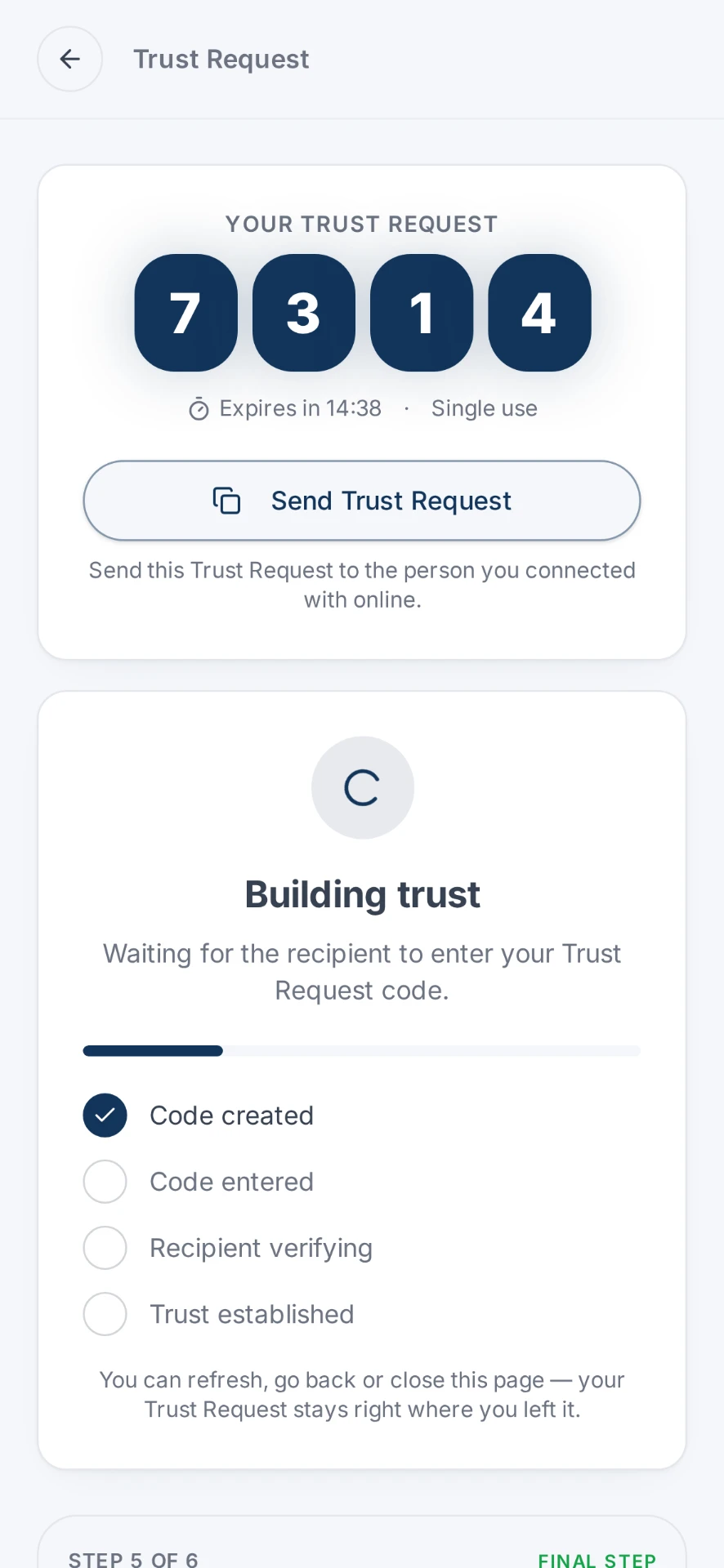
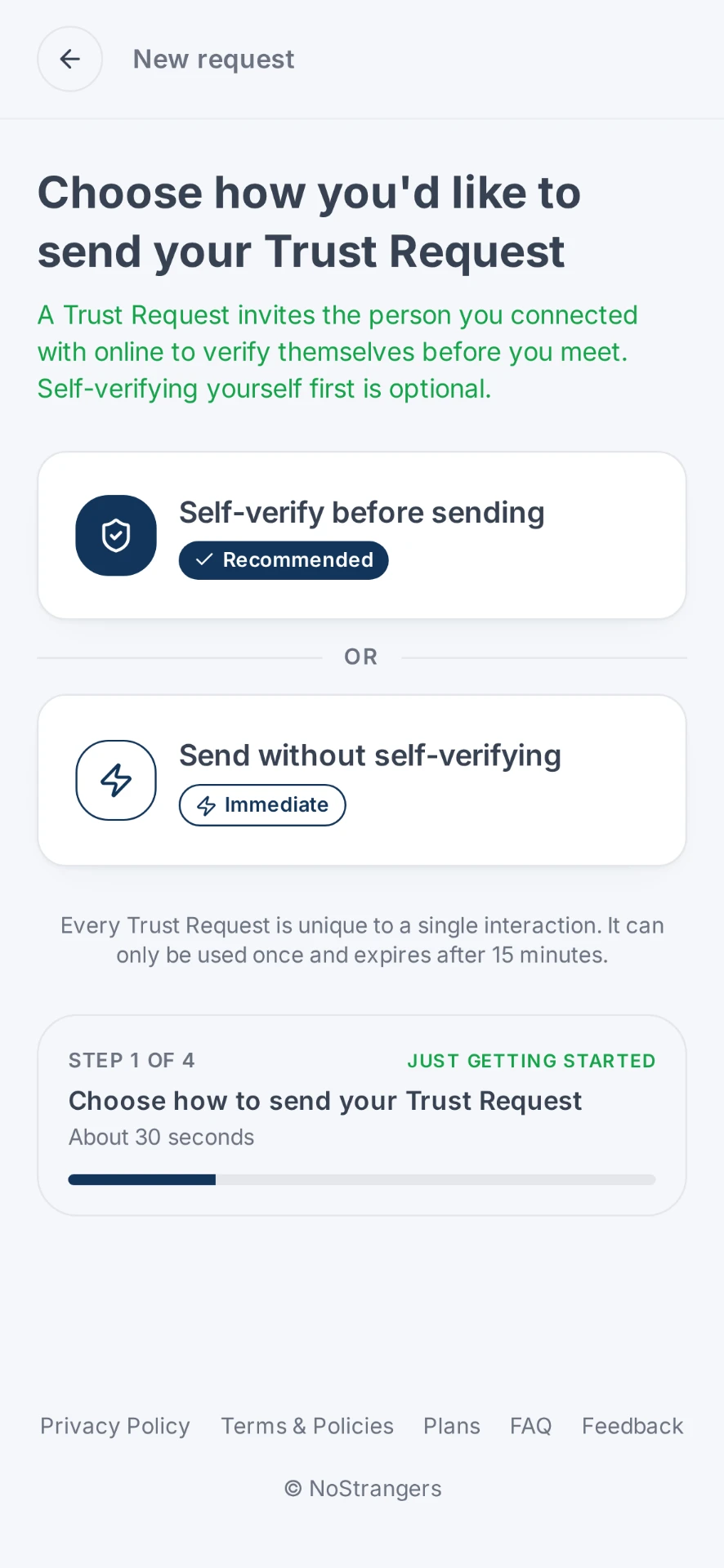
Send a Trust Request
After you've agreed in principle, generate a unique code and send it however you've been talking.
They verify
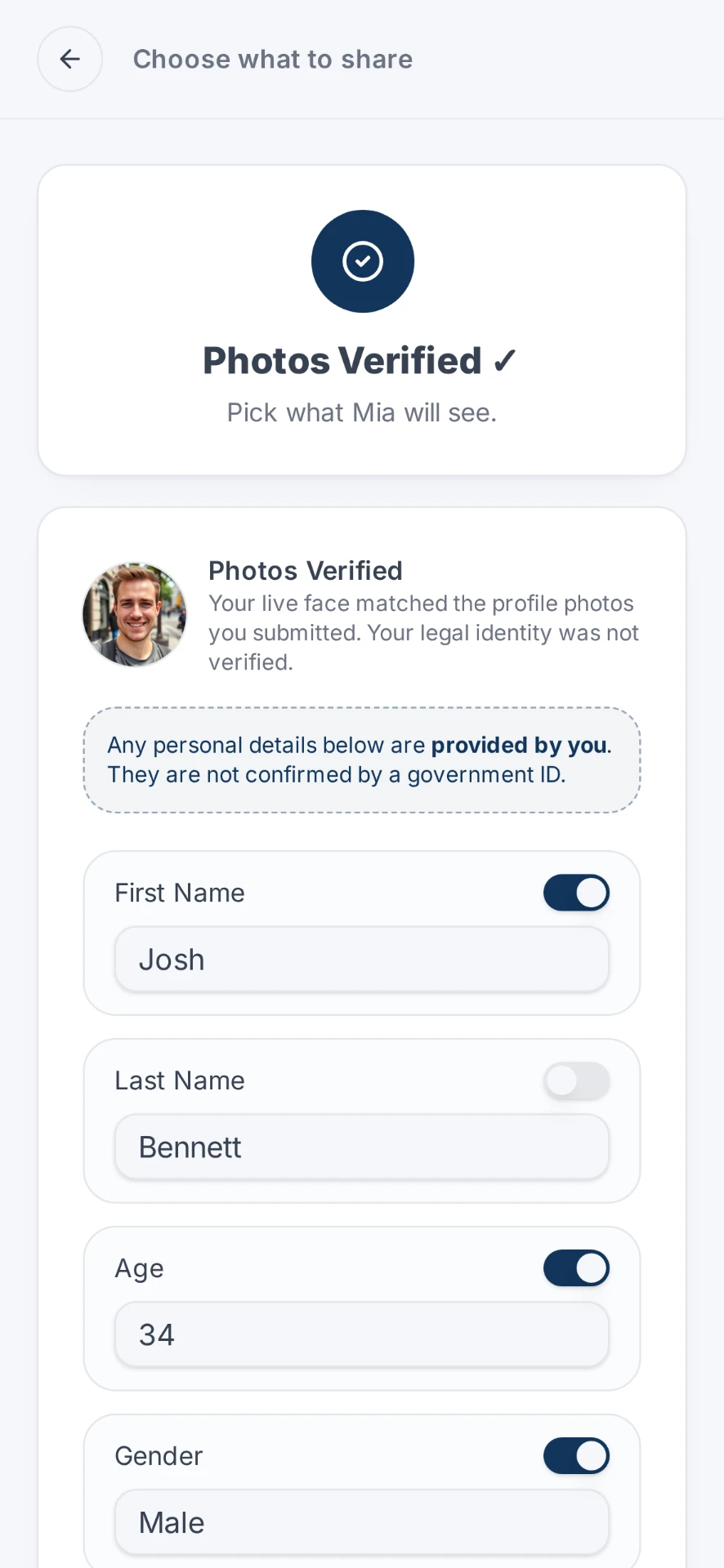
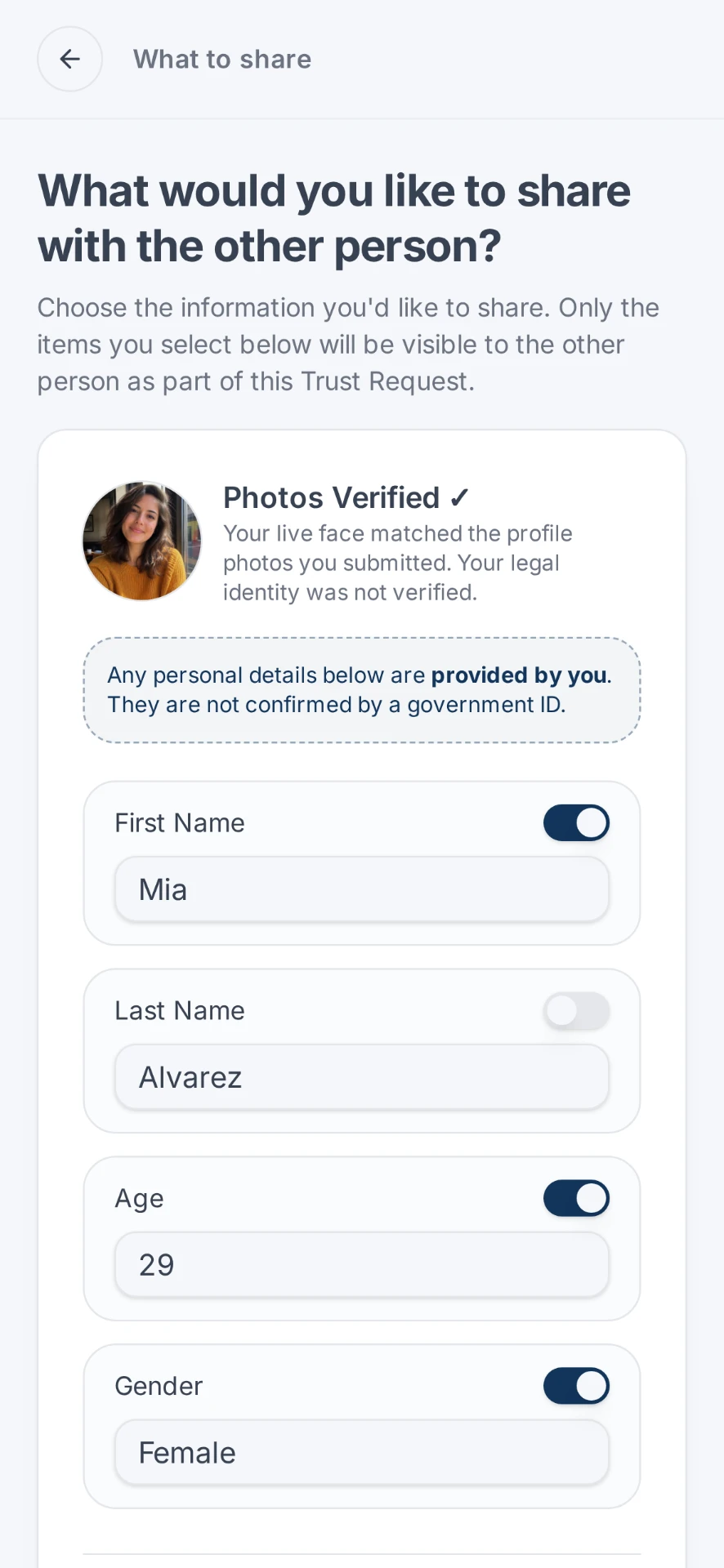
The sitter completes ID Verified: government-issued identity documentation plus a live face check, and chooses what to share back with you. They may ask you to verify too, since they're moving into your home while you're away.
Confirm the sit
With identity established, commit the dates and plan the handover walkthrough.
✓ Trust Established
Mia is now a NoStranger.
You can now view the information Mia has chosen to share.
★★★★★ IDENTITY VERIFIED
Mia Alvarez
Approx. connection location: Wellington, NZ
Age
29
Gender
Female
First name
Mia
Last name
Alvarez
Identity Verified
These details were verified from a government-issued ID and checked against authoritative records, with a live face check confirming the person completing the verification matches the ID.
You only see what they chose to share. This code can't be used again.
Privacy
Verify each other. Don't email your passport.
Only the match is shared. Your private information isn't. They don't see it. Neither do we.
House-sitting arrangements often end with someone photographing a passport and sending it to a stranger overseas. That copy then exists indefinitely, in an inbox neither of you controls.
A Trust Request is built to avoid that trade entirely. The sitter chooses what goes into their side, and you see only what they chose to share. They can ask you to verify too, which many sitters appreciate before moving into a stranger's home.
More detail in our Privacy Policy.
When to use it
When house sitters and homeowners use it
A long trip and an empty house
Weeks away, with someone else living in your home, collecting your post and using your car.
An international sitter
You've only ever spoken by message or a single video call, and they arrive the day you leave.
A home exchange
Both households are granting access, so both have the same question to answer.
Arranged through a group, not a platform
A social-media or community-page arrangement with no reviews, escrow or dispute process behind it.
A gap-filling sit
A few days between tenancies or renovations, arranged quickly with someone you've just met.
Sitters protecting themselves
Before booking flights around a stranger's house, a sitter can ask the homeowner to verify as well.
Be clear
What a Trust Request establishes before handover
Identity, confirmed in advance. Not a guarantee about the person or the property.
It can help you
- Establish that a live person completed the verification process.
- Confirm, with ID Verified, government-issued identity documentation plus a live face check, the level suited to unsupervised home access.
- Let the sitter verify without exchanging ID documents with you, and choose what to share back. They can ask you to verify too.
- Give you verified information before flights, dates and keys are committed.
It doesn't
- Check references, sitting history, insurance or criminal records.
- Confirm property ownership, condition or that a listing is genuine.
- Predict how someone will treat your home.
- Guarantee safety, or replace a proper handover walkthrough and a local contact.
FAQ
House sitting verification questions
How do I verify a house sitter I arranged online?
Send a Trust Request once you've agreed dates and before you confirm the handover, and ask for ID Verified. Unsupervised access to your whole home calls for the stronger level: the sitter completes government-issued identity documentation plus the required live face check and chooses what to share back, so you can see they have established who they are.
When is the right moment to verify?
Before the handover, and ideally before you commit your travel dates to the arrangement. Verifying after someone already has the keys gives you information you can no longer act on easily.
Can a house sitter verify the homeowner?
Yes, and they should feel free to ask. A sitter is agreeing to live in a stranger's house, sometimes in a country they've never visited. The same Trust Request lets each side verify, with each seeing only what the other chose to share.
Does this work for home exchanges?
It does. In an exchange both households are giving access, so verification in both directions is the natural fit. It confirms identity only, not the condition, ownership or insurance status of either property.
Does NoStrangers vet the sitter or check references?
No. It does not check references, rental or sitting history, insurance, criminal records or how well someone has looked after a home before. ID Verified establishes who the sitter is, using government-issued identity documentation and a live face check, and never involves either of you handing over ID documents. References and platform reviews remain worth collecting separately.
What else should I do at handover?
Walk the house together, write down what access has been given, note meter readings and alarm codes, tell a neighbour who is staying, and agree how to reach each other while you're away. Verification supports those steps rather than replacing them.
Does a verified sitter mean my home is safe?
No. Verification gives you confirmed information about who you're dealing with so you can decide better. It cannot guarantee safety, predict behaviour or protect your property on its own.
Related use cases
Verify before the handover, not at the door.
About 90 seconds, weeks before anyone books a flight.