Real estate
Establish who you're dealing with before you meet, transact or grant access.
Letting a flat, arranging a viewing or applying for one all begin the same way: an exchange between two people who cannot see each other. ID Verified lets you establish who's who, using government-issued identity documentation and a live face check, before you meet at an empty property or send your documents.
✓ Trust Established
Mia is now a NoStranger.
You can now view the information Mia has chosen to share.

★★★★★ IDENTITY VERIFIED
Mia Alvarez
Approx. connection location: Wellington, NZ
Age
29
Gender
Female
First name
Mia
Last name
Alvarez
Identity Verified
These details were verified from a government-issued ID and checked against authoritative records, with a live face check confirming the person completing the verification matches the ID.
You only see what they chose to share. This code can't be used again.
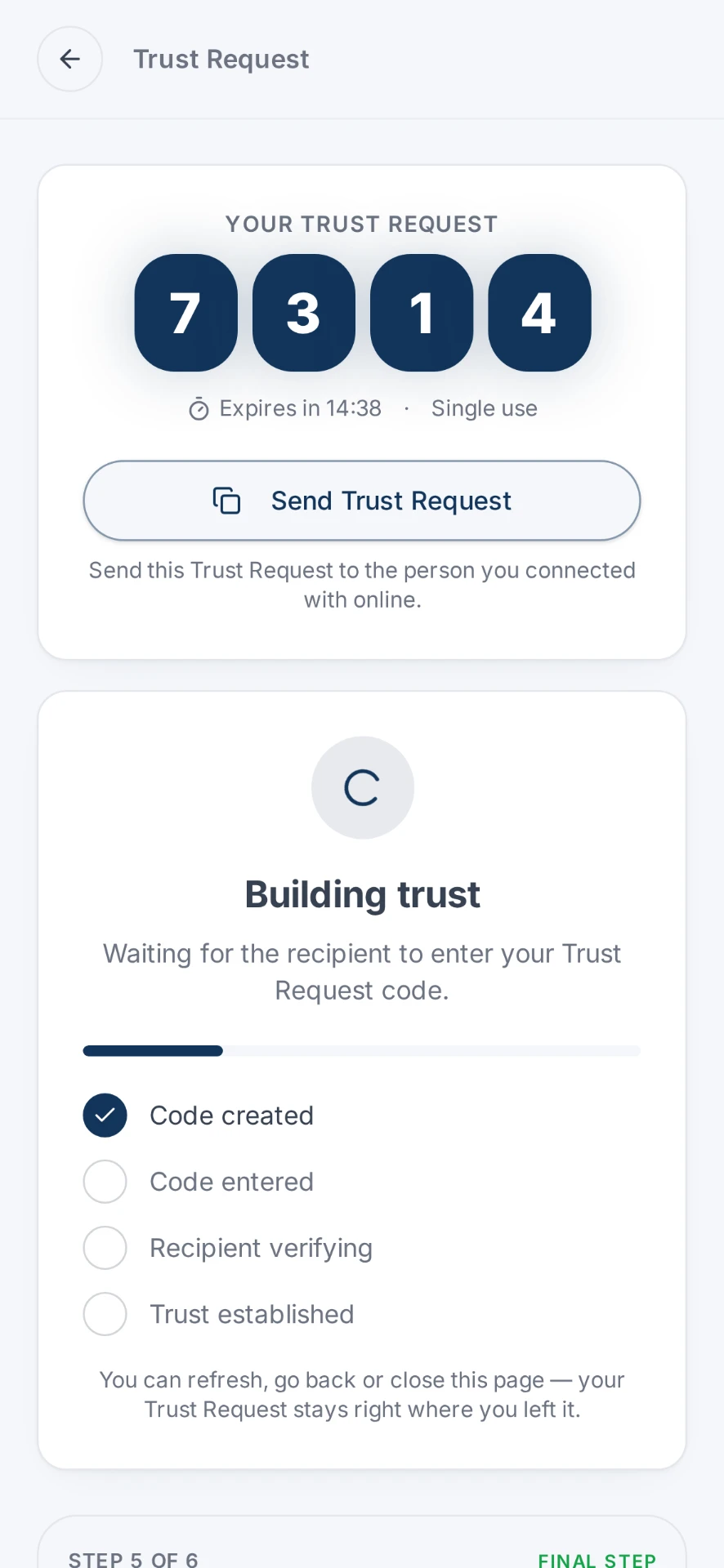
The evidence
Property fraud is concentrated at exactly this first-contact stage
Figures published by the UK Home Office and the U.S. Federal Trade Commission.
£9m
in reported rental fraud losses across around 5,000 reported cases in England, Wales and Northern Ireland in the year reported; 18 to 29-year-olds accounted for 48% of reported cases and 30 to 39-year-olds a further 25%.
UK Home Office / National Fraud Intelligence Bureau, March 2025$65m
in reported losses across nearly 65,000 rental scams reported to the FTC since 2020; around half of reports in the 12 months to June 2025 started with a fake advert on Facebook, and 16% on Craigslist.
U.S. Federal Trade Commission, December 2025The gap
Property paperwork is heavily checked. The people are barely checked at all.
Property transactions eventually involve serious verification: title searches, conveyancing, referencing, anti-money-laundering checks. All of it happens after the parties have already met, viewed and agreed in principle.
The early stage is wide open. An advert generates enquiries from anonymous accounts; a viewing puts one person alone in an empty building with another; an application asks a tenant to hand over payslips, bank statements and identity documents to whoever placed the advert.
Both sides can be impersonated. Adverts get copied and reposted by people with no connection to the property, and enquiries arrive from accounts created that morning.
NoStrangers does not verify property ownership, legal title, letting authority, tenancy history, financial capacity or right to rent.
It settles identity at the point where nothing else does. If you're filling a room rather than letting a whole property, our Roommates page covers that specific situation.
How it works
How NoStrangers works around a property viewing
Between the enquiry and the appointment, in either direction.
Send a Trust Request
Reply to the enquiry or the advert with a unique code before confirming a time.
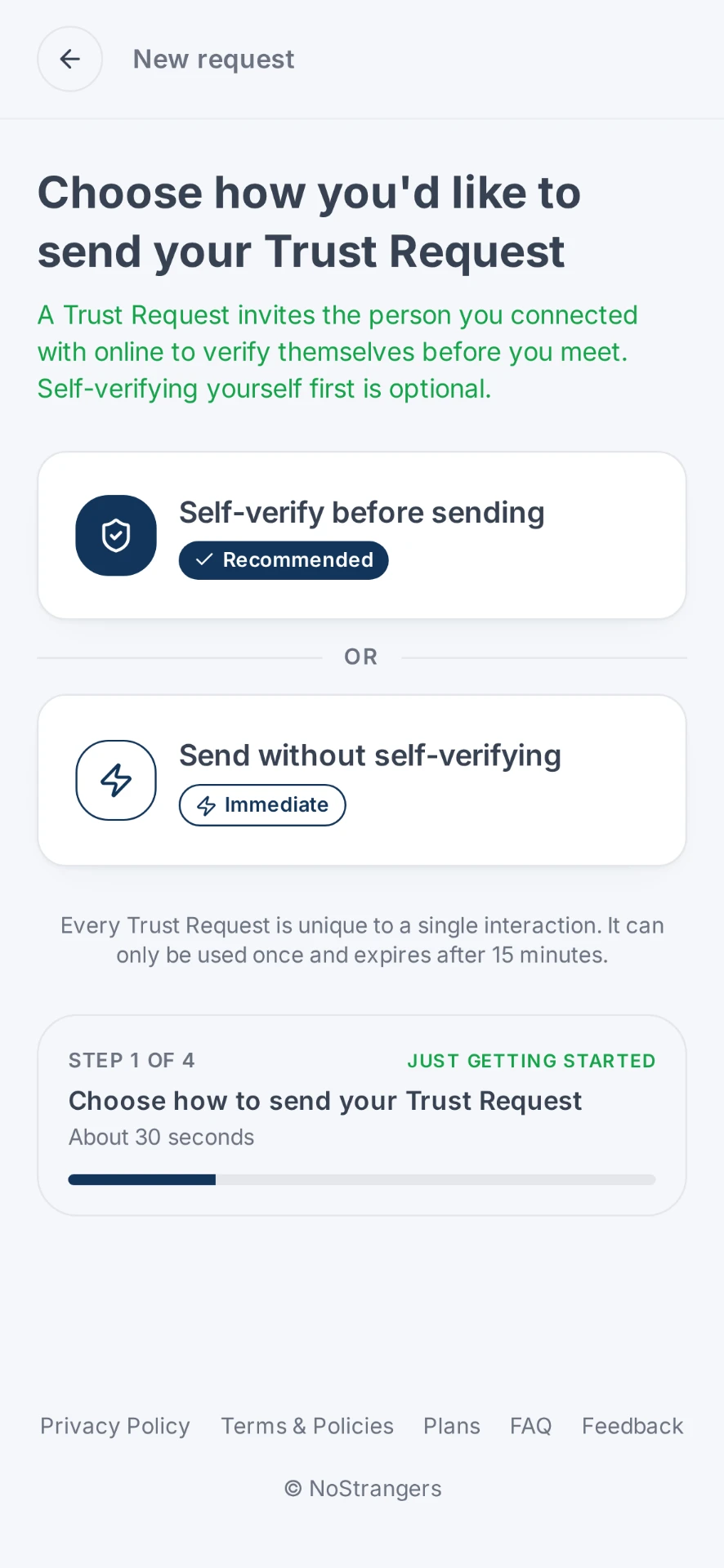
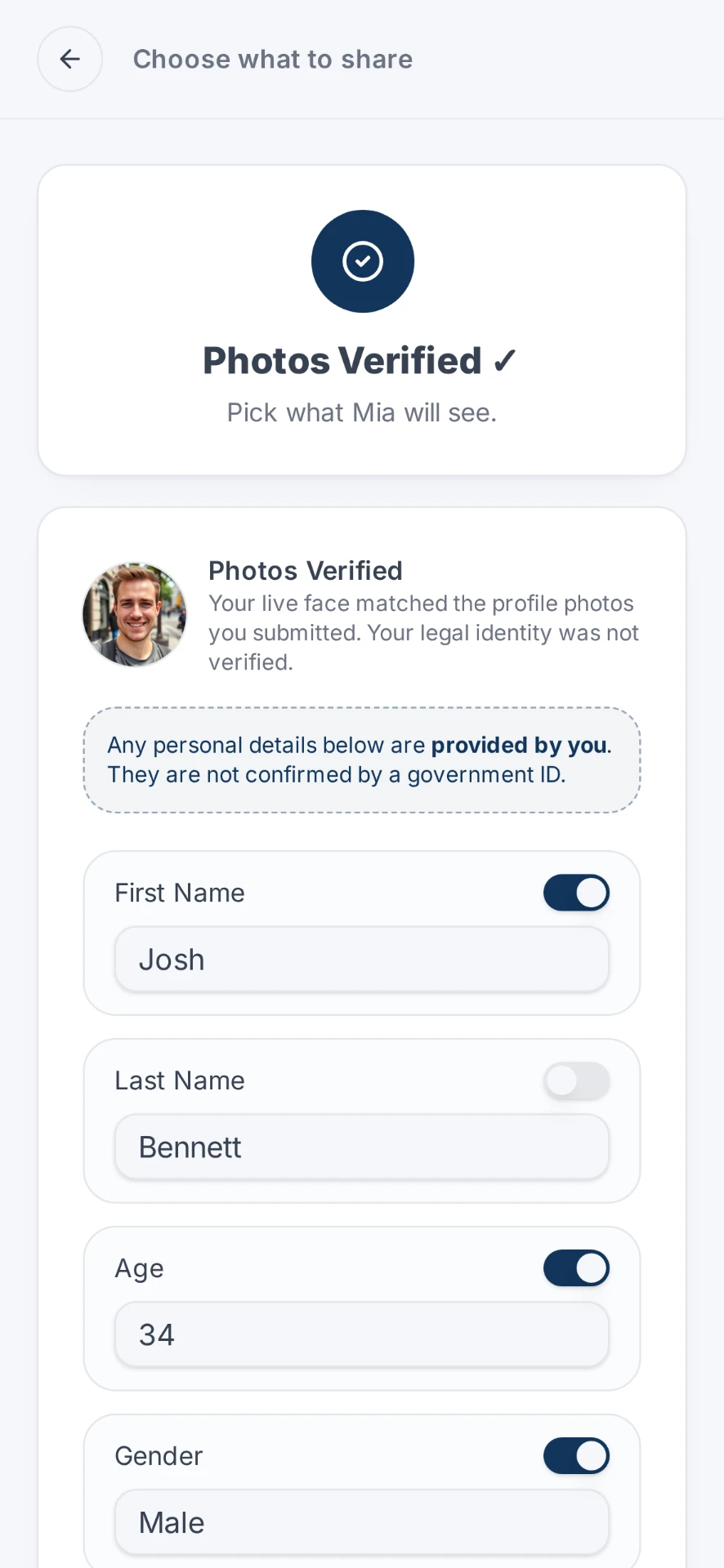
They verify
The other person completes ID Verified, a live face check alongside their government-issued ID, and chooses what to share back.
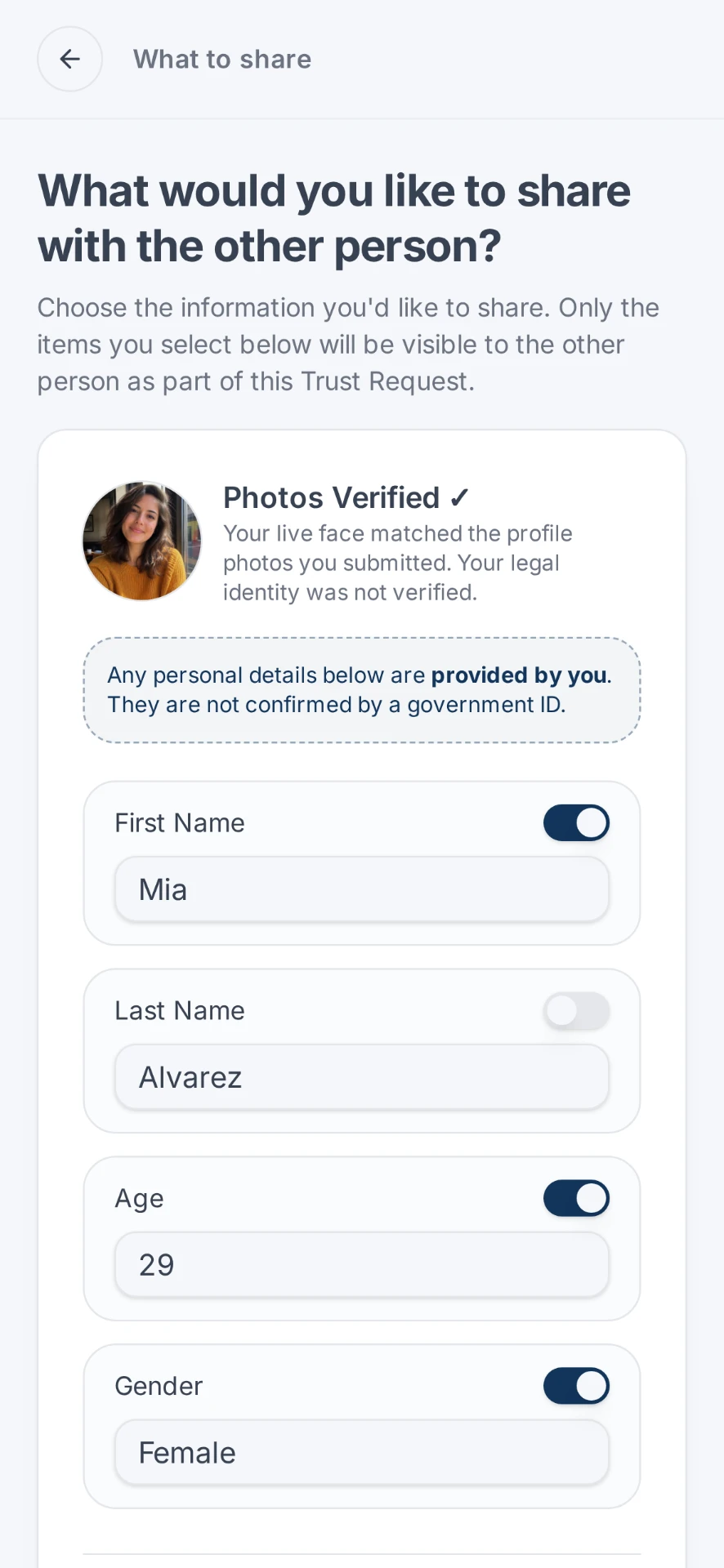
Confirm the viewing
With identity established, set the appointment, and tell someone where you'll be.
✓ Trust Established
Mia is now a NoStranger.
You can now view the information Mia has chosen to share.
★★★★★ IDENTITY VERIFIED
Mia Alvarez
Approx. connection location: Wellington, NZ
Age
29
Gender
Female
First name
Mia
Last name
Alvarez
Identity Verified
These details were verified from a government-issued ID and checked against authoritative records, with a live face check confirming the person completing the verification matches the ID.
You only see what they chose to share. This code can't be used again.
Privacy
Ask for verification first. Send documents later, if at all.
Only the match is shared. Your private information isn't. They don't see it. Neither do we.
A rental application is one of the most sensitive bundles most people ever email: identity documents, payslips, bank statements, employer details, references. Handing it to an unverified advertiser is a real risk in itself.
ID Verified keeps that step separate and minimal, and it never means exchanging identity documents with the other person directly. Each person chooses what goes into their side, and each sees only what the other chose to share.
More detail in our Privacy Policy.
When to use it
Property moments where identity matters
A private rental advertised online
No agency involved, arranged directly between landlord and tenant through a listing or group.
Viewings in an empty property
One person alone in a vacant flat or house with someone they've only messaged.
Before a holding deposit
You're asked to pay to secure a property you haven't seen, or haven't seen with the right person.
Applying from overseas
A tenancy arranged remotely, where identity is the only thing either side can establish in advance.
Open homes and buyer enquiries
Strangers walking through a home that is still lived in, with the owner's possessions in place.
Serious buyer or seller enquiries
Before sharing valuations, plans or financial details with a counterpart you've never met.
Be clear
What a Trust Request establishes in a property enquiry
Who's at the door. Nothing about the building, the tenancy or the money.
It can help you
- Establish that a live person completed the verification process.
- With ID Verified, establish who that person is, using government-issued identity documentation and a live face check.
- Let landlord and tenant, or buyer and seller, establish each other's identity before meeting.
- Give you a verified identity before documents, deposits or addresses are exchanged.
It doesn't
- Verify property ownership, legal title, or someone's authority to let or sell.
- Check tenancy history, references, credit, employment, financial capacity or right to rent.
- Confirm that an advert, a property or the terms offered are genuine.
- Guarantee anyone's safety at a viewing, or replace telling someone where you'll be.
FAQ
Property viewing verification questions
How do I verify someone who has enquired about my property?
Send a Trust Request before you confirm a viewing, and ask for ID Verified. They complete a live face check alongside their government-issued ID and choose what to share, so you can establish who is meeting you at the property rather than only an email address.
I'm a prospective tenant. Can I verify the landlord?
Yes, and it's a sensible habit. Tenants are the ones usually asked to send holding deposits and identity documents before they've met anyone. The same Trust Request works in both directions.
Does NoStrangers confirm someone owns the property?
No. It does not verify ownership, title, tenancy history, letting authority, financial capacity or legal standing. Confirm those through the land registry or title search for your jurisdiction, the letting agency, and your own legal advice.
What about viewings as a lone agent or owner?
Verify the attendee beforehand, tell a colleague or family member where you'll be and when you expect to finish, agree an arrival time rather than an open window, and avoid being led into back rooms or basements ahead of a stranger.
Is this useful for private rentals advertised on social media?
That is where it helps most. Listings posted in social groups have no verification, no agency, and no complaints process, and both landlord and tenant are working entirely on trust.
Should I verify before sending payslips and ID for an application?
Verifying who you're dealing with first is wise. A rental application bundle is a near-complete identity kit, and it should not be sent to an unverified person on the strength of an advert.
Does verification mean a tenancy or purchase is legitimate?
No. It establishes that a live person matches the identity they verified with. It cannot confirm the property is available, that the person may let or sell it, or that the terms offered are genuine.
Related use cases
Verify before the viewing.
About 90 seconds, before anyone meets in an empty property or sends a deposit.