Remote hiring
Is the person in the interview the person who does the job?
A fully remote hire can be made without anyone ever being in the same room. A Trust Request adds an independent ID Verified check, establishing who the candidate actually is, before you spend interview time, and again before credentials and equipment are issued.
✓ Trust Established
Mia is now a NoStranger.
You can now view the information Mia has chosen to share.

★★★★★ IDENTITY VERIFIED
Mia Alvarez
Approx. connection location: Wellington, NZ
Age
29
Gender
Female
First name
Mia
Last name
Alvarez
Identity Verified
These details were verified from a government-issued ID and checked against authoritative records, with a live face check confirming the person completing the verification matches the ID.
You only see what they chose to share. This code can't be used again.
The evidence
Applicant identity fraud is documented, and at scale
Findings from the U.S. Department of Justice and research firm Gartner.
100+
U.S. companies employed people the Justice Department described as North Korean actors using stolen and fake identities for remote IT work, as part of coordinated nationwide enforcement actions announced in June 2025.
U.S. Department of Justice, June 2025$88m
generated by a multi-year conspiracy in which 14 North Korean nationals were indicted for using false, stolen and borrowed identities to obtain remote IT jobs with U.S. companies and nonprofits.
U.S. Department of Justice, December 20241 in 4
candidate profiles worldwide will be fake by 2028, Gartner predicts; in its 2Q25 survey of 3,000 candidates, 6% admitted taking part in interview fraud.
Gartner, July 2025The gap
Remote recruitment verifies documents and assumes the person.
A remote process is a chain of artefacts: a CV, a portfolio link, a profile, scanned documents, a series of video calls. Every element can be supplied by someone other than the person who eventually logs in on day one.
Background screening does not close this. A clean check is attached to a name, and if the name belongs to a real person who is not the applicant, the check comes back clean and tells you nothing about who you hired.
The consequences land at onboarding: a laptop posted to an address, credentials issued, access granted to systems and customer data, all keyed to an identity nobody physically confirmed.
NoStrangers is not a screening service. It does not check criminal records, employment history, qualifications or right to work.
It supplies the missing link: an independent ID Verified check, initiated by you, of the person actually on the other side of the process.
How it works
How NoStrangers fits a remote hiring process
Lightweight enough to run early, and again at the point access is granted.
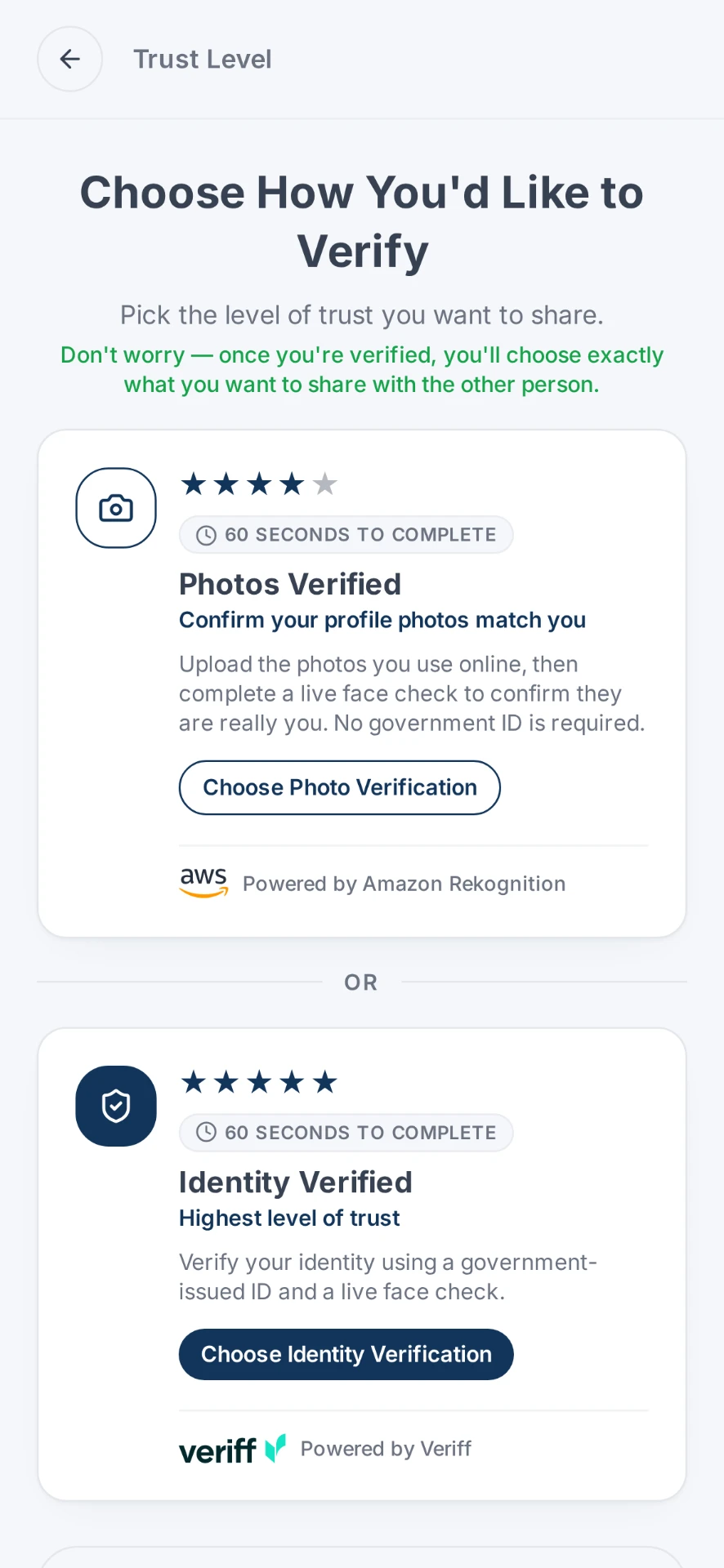
Send a Trust Request
Include a unique code with the interview invitation, or at the offer stage.
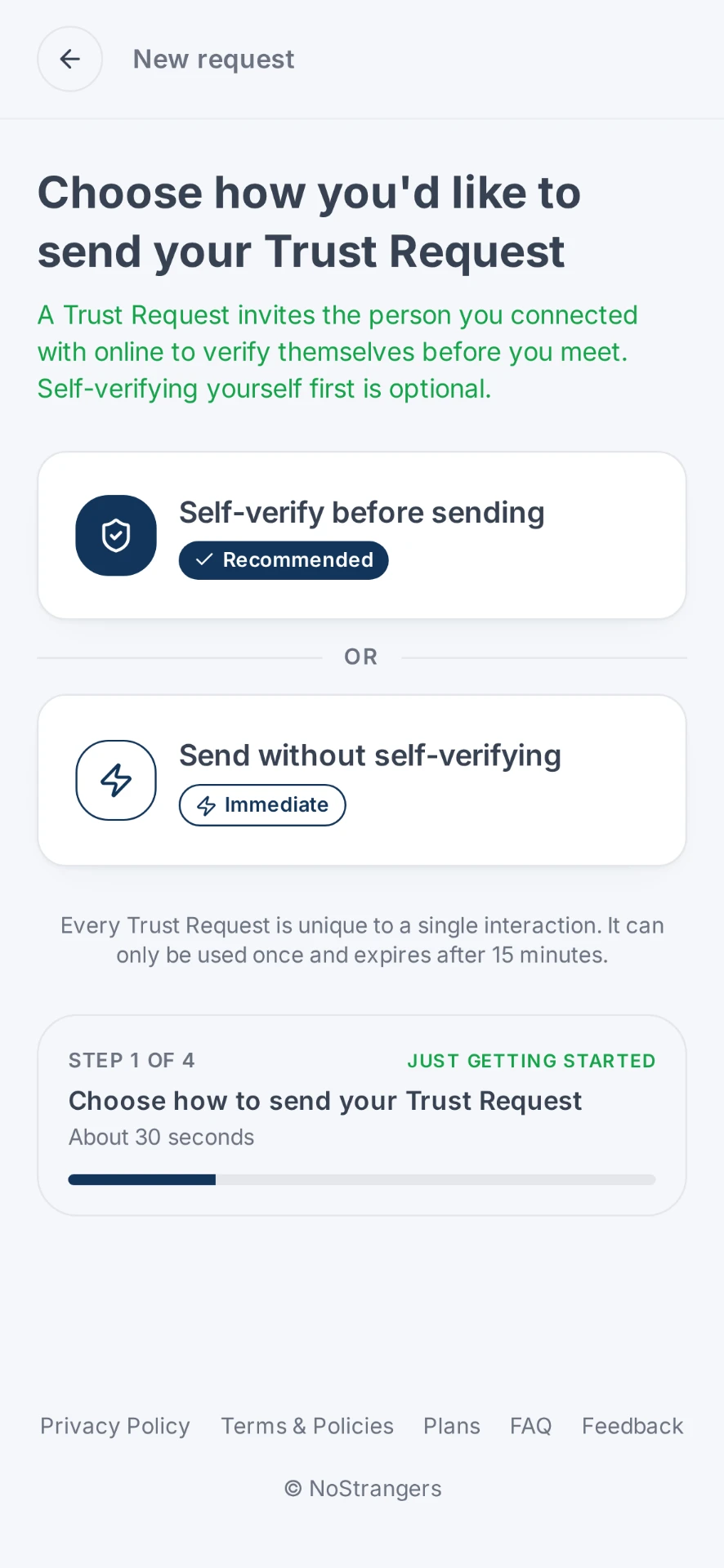
The candidate verifies
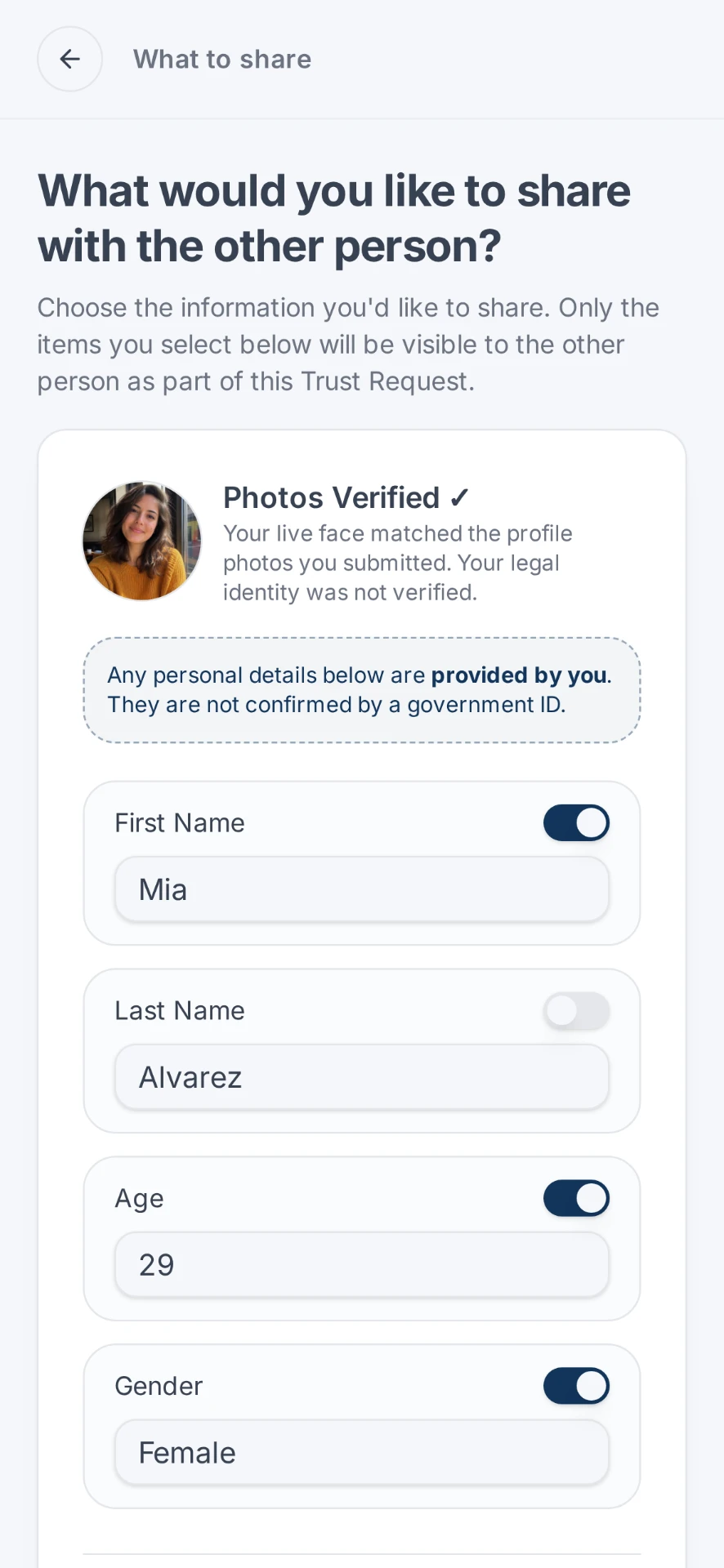
They complete an ID Verified check, government-issued ID plus a live face check, and choose what to share back. This isn't an exchange of ID documents with your team; only the verified match is shared.
Move the hiring process forward
With identity confirmed, continue to interview or offer, and repeat the check at onboarding when equipment, credentials and system access are issued.
✓ Trust Established
Mia is now a NoStranger.
You can now view the information Mia has chosen to share.
★★★★★ IDENTITY VERIFIED
Mia Alvarez
Approx. connection location: Wellington, NZ
Age
29
Gender
Female
First name
Mia
Last name
Alvarez
Identity Verified
These details were verified from a government-issued ID and checked against authoritative records, with a live face check confirming the person completing the verification matches the ID.
You only see what they chose to share. This code can't be used again.
Privacy
Verify the candidate. Collect less about them.
Only the match is shared. Your private information isn't. They don't see it. Neither do we.
Recruitment already accumulates sensitive data, and every stored copy of a passport or licence is a liability for the employer as well as the candidate. A Trust Request is built so each side chooses what to share and sees only the other's selection.
Candidates can verify you too, which matters in a market where fake recruiters and fake job offers are common.
More detail in our Privacy Policy.
When to use it
Where hiring teams use it
Before a shortlist interview
Filter out identity problems before senior people spend hours on panels.
At offer and onboarding
Confirm identity again at the moment laptops, logins and access are issued.
Contractors and agency placements
The person presented by an intermediary is not always the person who starts.
Hiring across borders
No shared office, no in-person step, and local screening options that vary by country.
Suspicion mid-process
Camera reluctance, audio lag, answers that don't match the CV: verify rather than guess.
Candidates verifying employers
An applicant asked to buy equipment or share bank details can ask the employer to verify first.
Be clear
What a Trust Request establishes in hiring
An identity control. Not an employment screening product.
It can help you
- Establish that a live person completed an ID Verified check.
- Confirm who a candidate is, without either side exchanging ID documents.
- Give an independent check you initiated, at more than one stage of the process.
- Let candidates verify the employer in the same request.
It doesn't
- Perform criminal-record, employment-history, right-to-work or credit screening.
- Confirm qualifications, references or experience.
- Detect deepfakes or analyse your video-interview recordings.
- Assess competence, intentions or suitability for the role.
FAQ
Remote hiring identity questions
How do I confirm a remote candidate is who they claim to be?
Send a Trust Request before the interview or at the offer stage. The candidate completes an ID Verified check, government-issued ID plus a live face check, and chooses what to share back, giving you an independent check that you initiated rather than media they supplied. It doesn't involve the candidate sending you their ID documents.
Is NoStrangers a background-check service?
No. It does not check criminal records, employment history, qualifications, right-to-work status, references or credit. It is an identity step. Whatever screening your jurisdiction and role require remains separate.
What is interview substitution?
It is where one person is interviewed and a different person takes the role, or where an applicant is coached or represented by someone else on the call. An independent live verification step at more than one point in the process makes that pattern harder to sustain.
Can NoStrangers detect AI-generated candidates or deepfaked interviews?
It cannot detect deepfakes and does not analyse your video calls. What it adds is a separate live verification of a real person against the identity information they committed to. See our Deepfake Protection page for exactly where that line sits.
When in the process should we verify?
Most teams do it twice: once before investing interview time, and again at offer or onboarding, when equipment, credentials and system access are about to be issued.
Do candidates mind?
It is usually welcomed when it is proportionate. You send the request and the candidate completes it, but candidates are targeted by fake recruiters too, so offering to verify the employer in the same request reads as fairness rather than suspicion.
What does the candidate have to give us?
Only what they choose to share, and nothing is handed over as a document copy. That is deliberate: collecting fewer identity documents during recruitment reduces what you have to store and protect.
Related use cases
Verify before the interview, and again before the laptop ships.
About 90 seconds for the candidate, at the two moments that matter most.