Business meetings
An introduction is not an identity check.
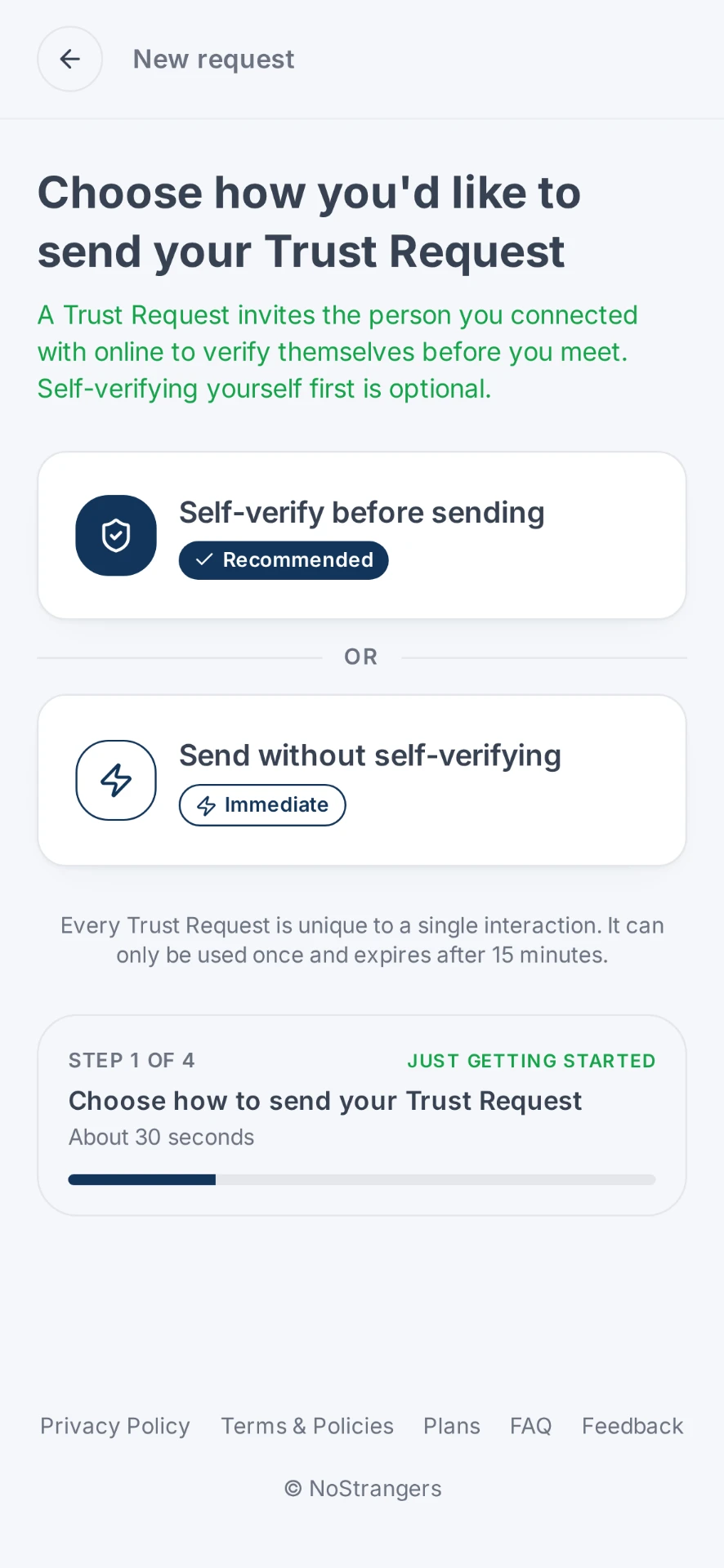
New suppliers, partners and investors now arrive by email, LinkedIn message or a forwarded introduction. Send a Trust Request and pick the right level: Photos Verified confirms someone matches the photos they're presenting, ID Verified establishes who they actually are, before a high-value conversation, confidential material or a payment instruction is on the table. You can ask this of them without verifying yourself, and verify each other where it matters to both of you.
✓ Trust Established
Mia is now a NoStranger.
You can now view the information Mia has chosen to share.

★★★★★ IDENTITY VERIFIED
Mia Alvarez
Approx. connection location: Wellington, NZ
Age
29
Gender
Female
First name
Mia
Last name
Alvarez
Identity Verified
These details were verified from a government-issued ID and checked against authoritative records, with a live face check confirming the person completing the verification matches the ID.
You only see what they chose to share. This code can't be used again.
The evidence
Impersonating a business contact is one of the costliest reported crimes
Figures from the FBI's Internet Crime Complaint Center annual report for 2024.
$2.77bn
in reported losses from business email compromise in the United States in 2024, across 21,442 complaints, a category built almost entirely on pretending to be a trusted contact.
FBI Internet Crime Complaint Center, 2024 Internet Crime Report$16.6bn
in total reported losses to internet crime in the United States in 2024, from 859,532 complaints, a 33% increase on 2023.
FBI, April 2025The gap
Business trust is built from signals that are trivially easy to imitate.
An email signature, a company logo, a professional profile, a lookalike domain and a polite introduction from a shared contact: together these feel like verification. Individually, each can be assembled in an afternoon.
The pattern that causes the most damage is not a stranger cold-calling you. It is a familiar name arriving through a slightly new channel (a different address, a new number, an unexpected calendar invitation) at a moment when a decision is genuinely pending.
Video does not settle it either. You did not choose who is behind the link, and appearing on a call is not evidence of identity.
NoStrangers verifies people, not organisations. It does not confirm employment, job titles, signing authority, company registration or financial standing.
It answers the narrow question that the rest of your controls depend on: is there a real person behind this meeting, and can they establish who they are? You can ask this of the other party without verifying yourself, and Photos Verified or ID Verified depends on what you're actually trying to settle. Where the stakes run both ways, verifying each other is worth the extra 90 seconds.
How it works
How NoStrangers works before an important meeting
Send it with the invitation, not after the conversation.
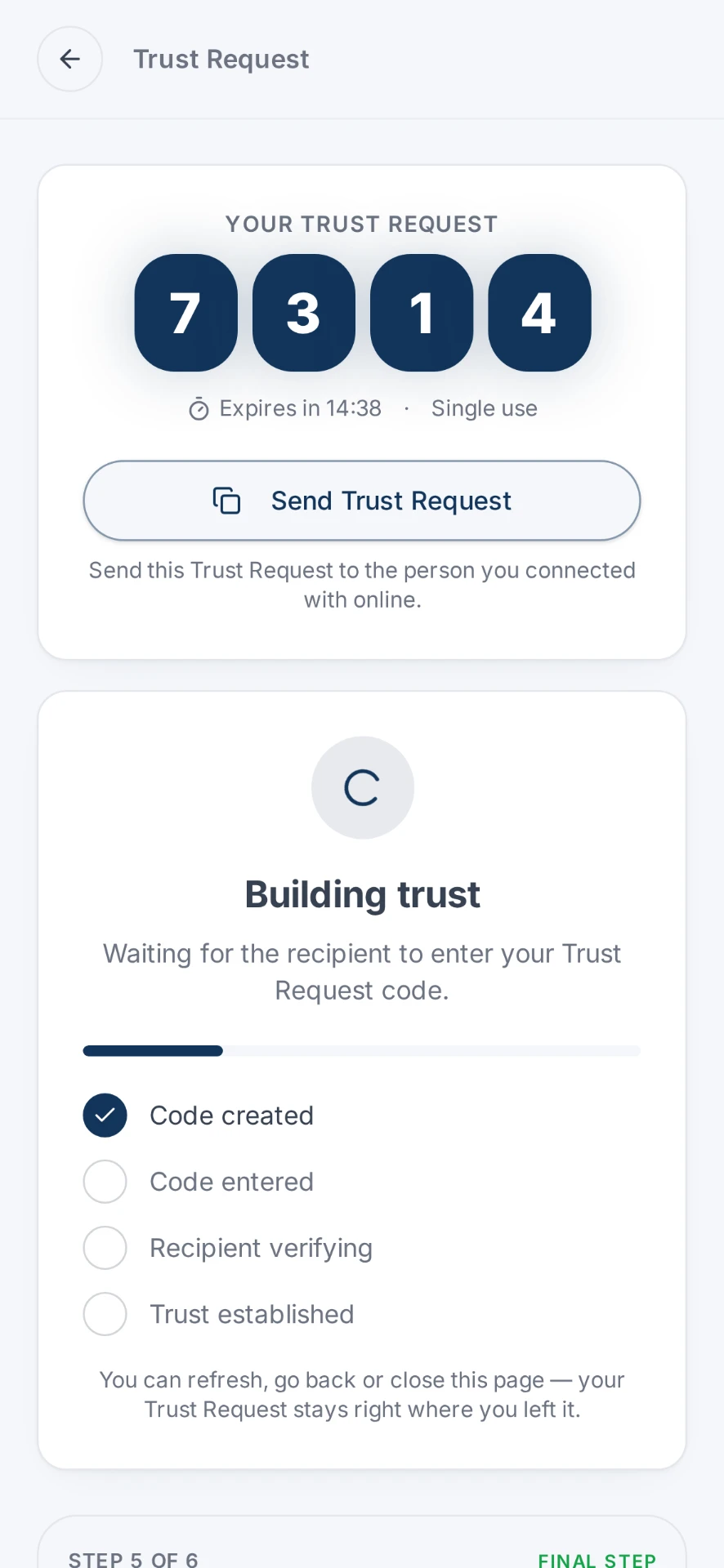
Send a Trust Request
Generate a unique code and include it when you confirm the meeting. You don't need to be verified yourself to send it.
They verify
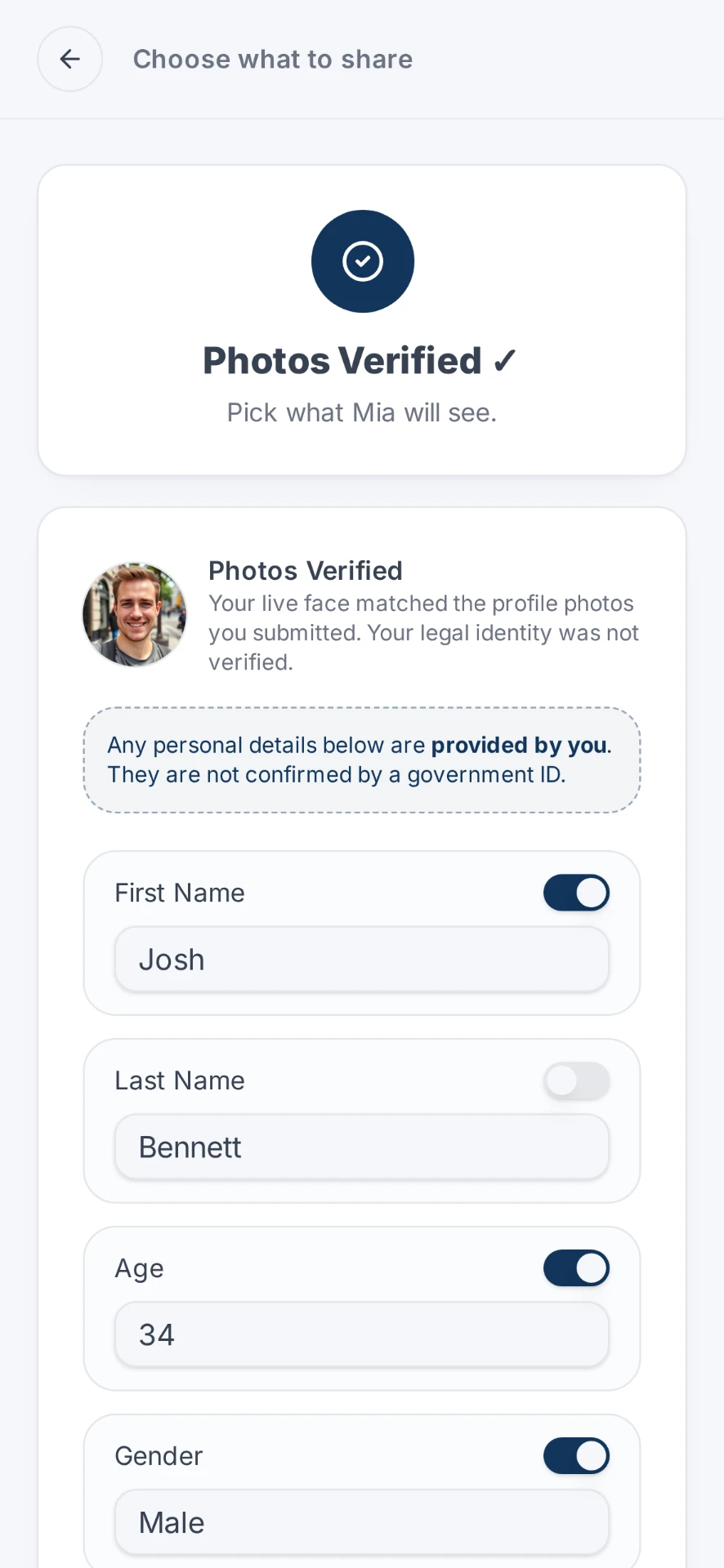
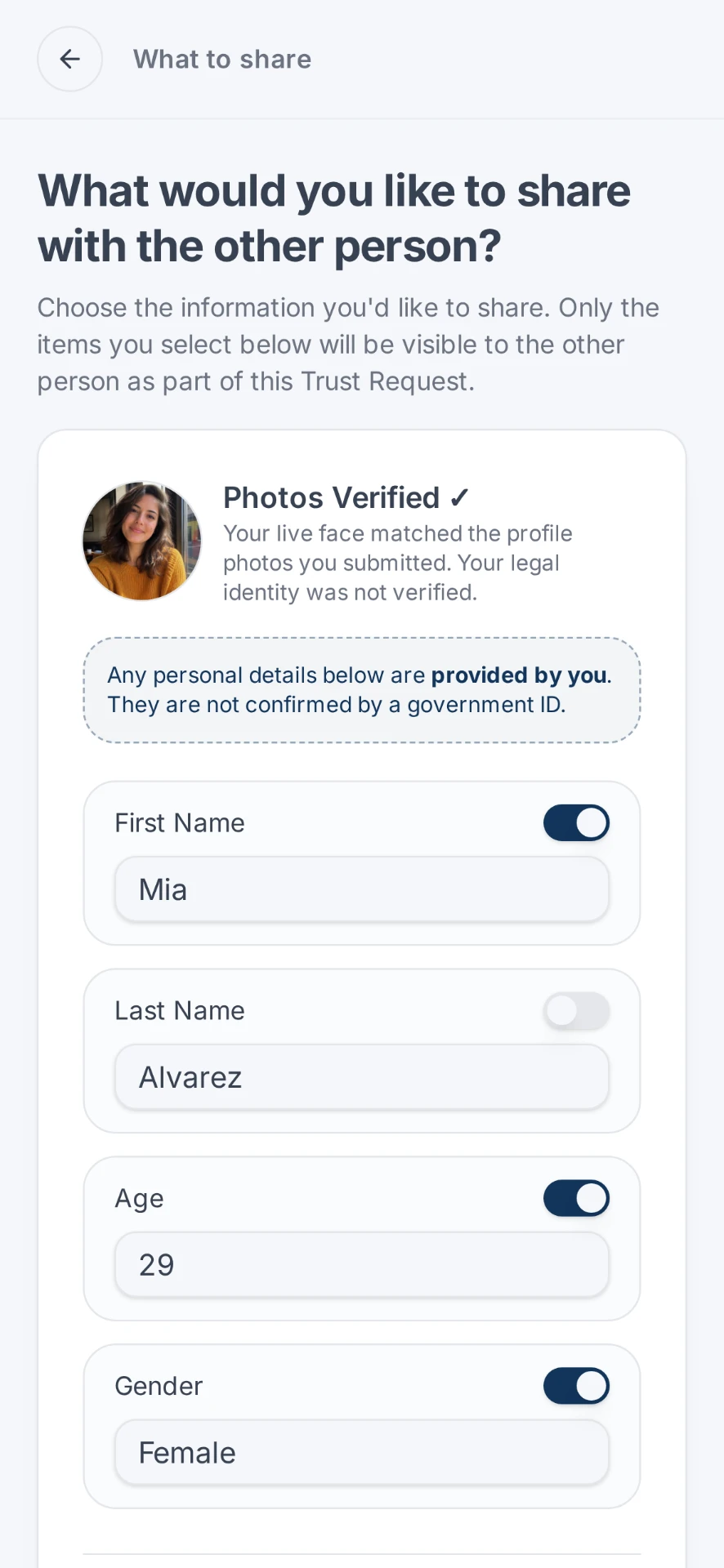
The other party chooses Photos Verified or ID Verified, depending on what the meeting calls for, completes the check and chooses what to share back. ID Verified doesn't mean trading ID documents with each other. If the stakes run both ways, ask each other.
Take the meeting
Identity is settled in advance, so the meeting is about the substance.
✓ Trust Established
Mia is now a NoStranger.
You can now view the information Mia has chosen to share.
★★★★★ IDENTITY VERIFIED
Mia Alvarez
Approx. connection location: Wellington, NZ
Age
29
Gender
Female
First name
Mia
Last name
Alvarez
Identity Verified
These details were verified from a government-issued ID and checked against authoritative records, with a live face check confirming the person completing the verification matches the ID.
You only see what they chose to share. This code can't be used again.
Privacy
Establish identity without opening your files.
Only the match is shared. Your private information isn't. They don't see it. Neither do we.
A first meeting is the wrong moment to be circulating identity documents. Whoever completes the Trust Request chooses what goes into their side, and the sender sees only what was shared back.
Because either side can send it, without needing to verify first, asking reads as standard practice rather than an accusation, which helps when the other party is a prospective client or investor.
More detail in our Privacy Policy.
When to use it
Meetings worth verifying first
A cold inbound approach
An unsolicited partnership, supply or investment enquiry with no mutual history behind it.
A forwarded introduction
You've been connected by someone you trust, to someone you know nothing about.
A contact writing from a new address
Same name, new email, new number, and something time-sensitive attached.
Before confidential material
Financials, roadmaps, customer lists or drawings are about to be shared with a new party.
New suppliers and contractors
Bank details and invoicing arrangements are about to be set up for the first time.
Meeting in person
A first face-to-face with a new counterpart, sometimes at their premises or in another city.
Be clear
What a Trust Request establishes before a meeting
It verifies a person. It does not vouch for a company or a deal.
It can help you
- Establish that a live person completed a Photos Verified or ID Verified check, matched to what you needed to confirm.
- Confirm who someone is (ID Verified), without either of you exchanging ID documents.
- Let you ask for verification without verifying yourself, or let both parties verify each other.
- Provide a verified counterpart before confidential material or payment details are exchanged.
It doesn't
- Confirm employment, job title, signing authority or company registration.
- Assess a company's solvency, licences or track record.
- Establish intentions, or that a proposal or invoice is genuine.
- Replace callbacks to known numbers, payment approval controls and contract review.
FAQ
Business meeting verification questions
How do I verify a new business contact before a meeting?
Send a Trust Request with the calendar invitation. You don't need to verify yourself to ask. Choose the level that fits what you need to establish: Photos Verified confirms they match the photos or profile they're presenting, ID Verified adds government-issued ID plus a live face check to establish who they actually are. Either way, identity is established before the meeting rather than assumed during it.
Why not just rely on the video call?
A call confirms someone appeared at a link you may not have created. It does not confirm who they are. Verification is a separate step you initiate, which is why it still means something when the call itself is the thing in doubt.
Does NoStrangers confirm someone works for the company they claim?
No. It does not verify employment, job titles, authority to sign, company registration, licences or financial standing. Those you check through company registers, official domains and a callback to a number you already hold.
Someone has emailed from a new address claiming to be an existing contact. What now?
Do not reply to the new thread with anything sensitive. Contact them through the channel you already have on record, and send a Trust Request so identity is established independently of the new address.
Is this appropriate for first meetings with investors or suppliers?
Yes. Either party can send the request without needing to verify themselves first, and it reads as professional practice rather than suspicion, particularly ahead of high-value discussions or the exchange of confidential material. Where both sides want assurance, both can verify.
What about meeting a new contact in person?
The same logic applies, plus the usual care: a public or office venue, a colleague who knows where you are, and no travelling to an unfamiliar address alone on the strength of a single email thread.
Does a verified contact mean the deal is legitimate?
No. It establishes that a live person matches the identity they verified with. It says nothing about their authority, their company's solvency or their intentions, and it does not replace payment controls or contract review.
Related use cases
Verify before the meeting, not during it.
About 90 seconds to complete, sent with the calendar invitation.