Pet sitting
Your key, your home, your dog: know who's holding all three.
Pet care is one of the few arrangements where a stranger gets access to your home while you're not in the country. Before the keys change hands, an ID Verified Trust Request lets owner and sitter establish who they're dealing with, privately and without swapping ID documents.
✓ Trust Established
Mia is now a NoStranger.
You can now view the information Mia has chosen to share.

★★★★★ IDENTITY VERIFIED
Mia Alvarez
Approx. connection location: Wellington, NZ
Age
29
Gender
Female
First name
Mia
Last name
Alvarez
Identity Verified
These details were verified from a government-issued ID and checked against authoritative records, with a live face check confirming the person completing the verification matches the ID.
You only see what they chose to share. This code can't be used again.
The trust problem
Pet sitting quietly bundles three kinds of access together.
Most pet-care arrangements start in a local group, a neighbourhood app or a comment thread: someone offers to walk dogs, someone else needs a fortnight covered. The conversation is friendly, the rate is agreed in a couple of messages, and the profile behind it may be a first name and one photo.
What is being handed over, though, is unusually broad. A sitter typically gets a key or a door code, an empty house, a routine that tells them when nobody is home, and responsibility for an animal that cannot tell you what happened while you were away.
There is no register of pet sitters and no licence to check. In practice, owners fall back on a friendly message thread and hope.
Identity is the part that can actually be established. Given a key is involved, ID Verified is the appropriate level: it confirms government-issued identity documentation plus a live face check, before anyone gets a key.
How it works
How NoStrangers works before a sitter gets your key
Do it before the meet-and-greet, not after the handover.
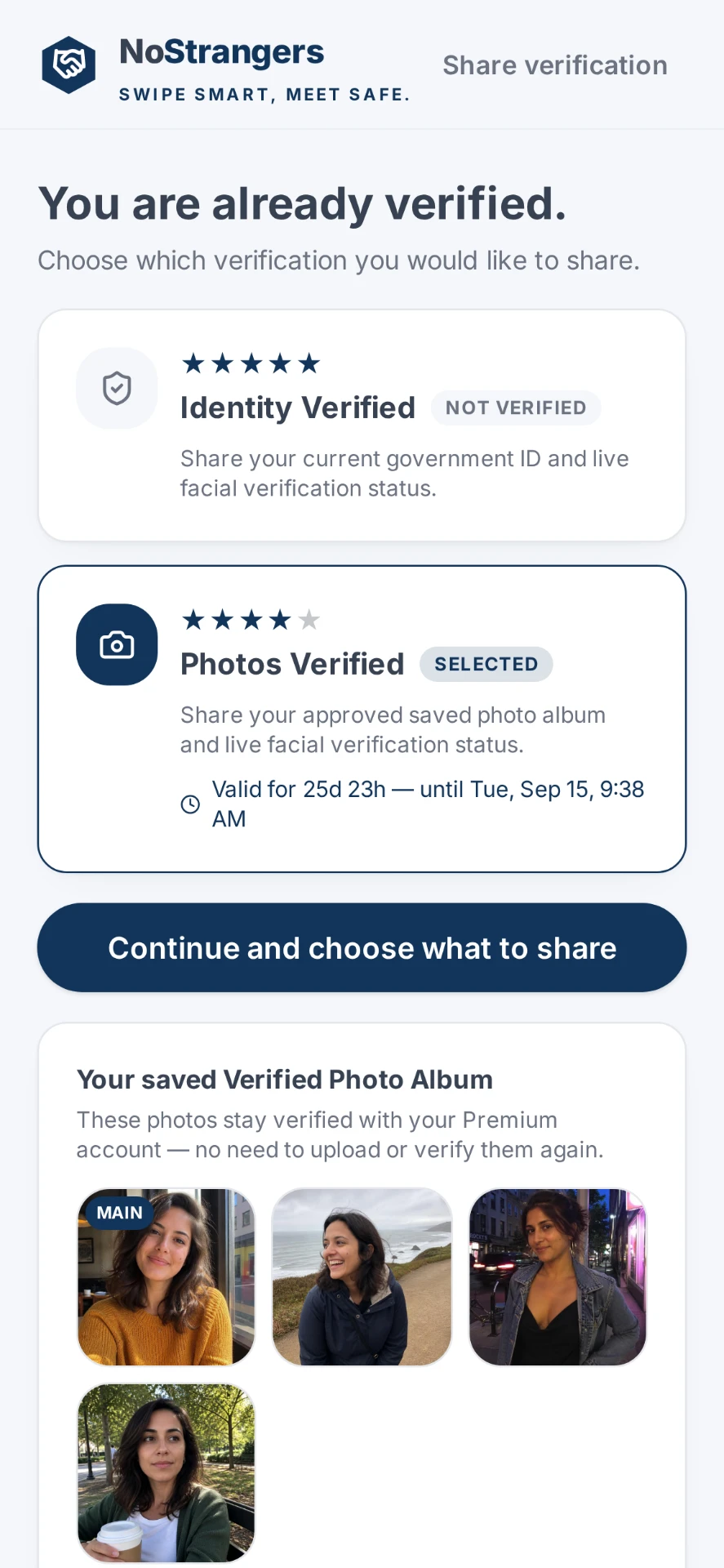
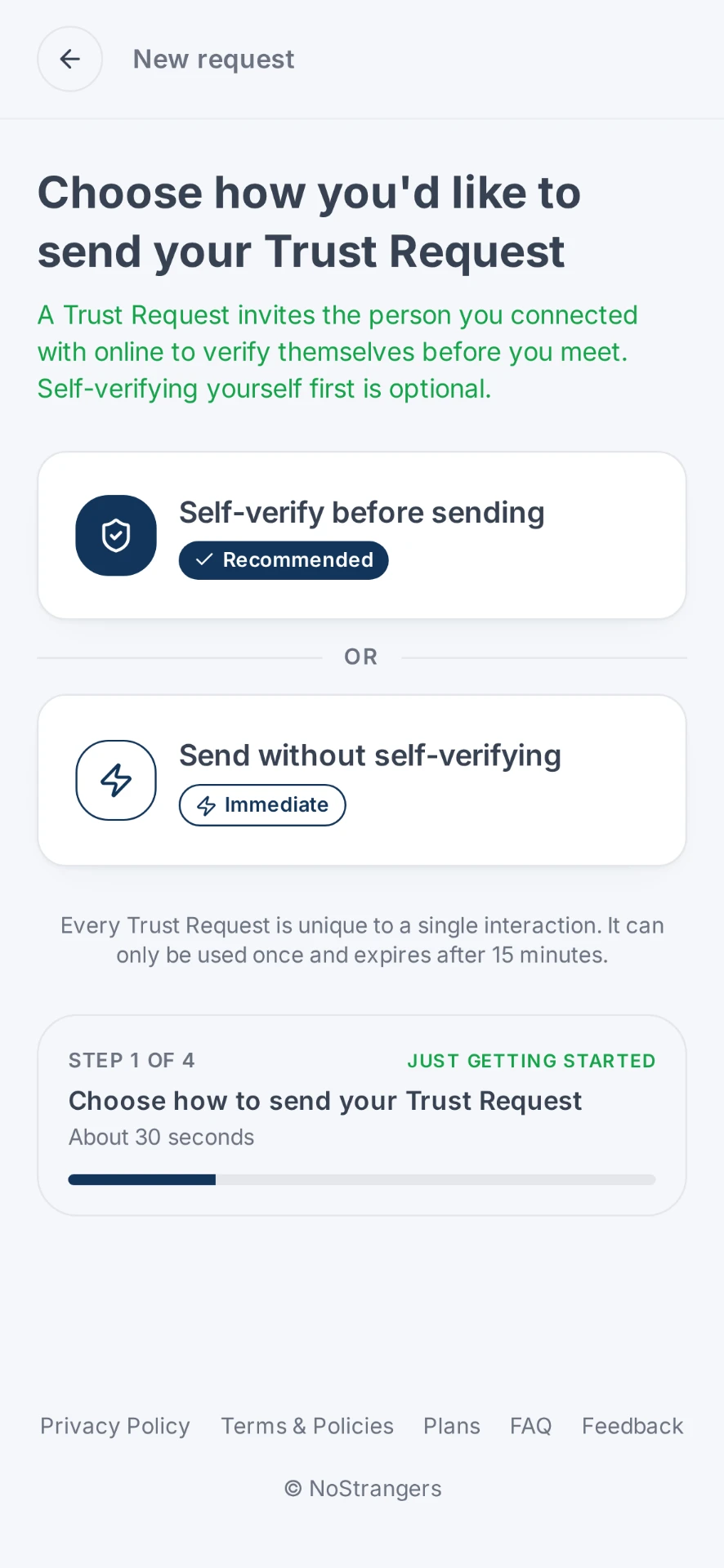
Send a Trust Request
Generate a unique code and send it in the chat where you arranged the sitting.
They verify
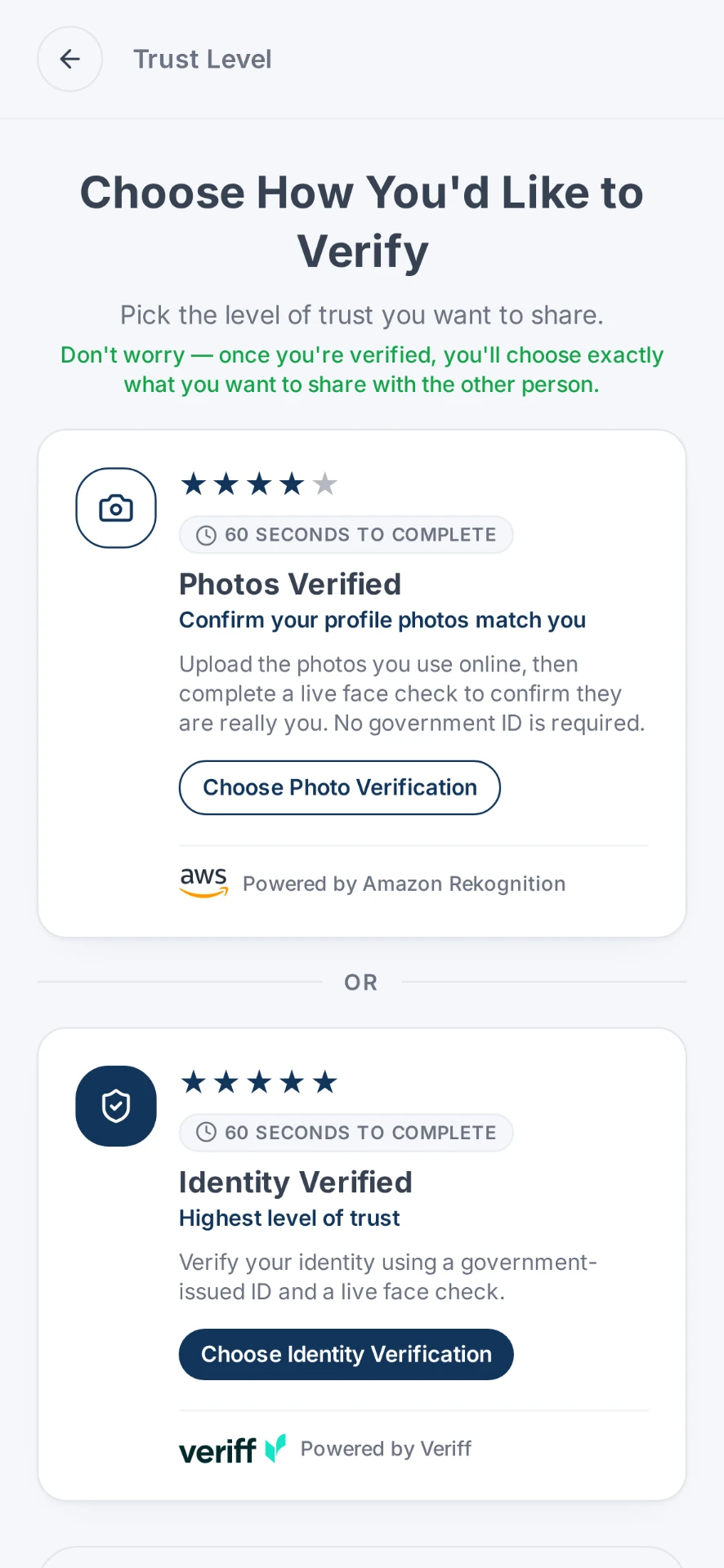
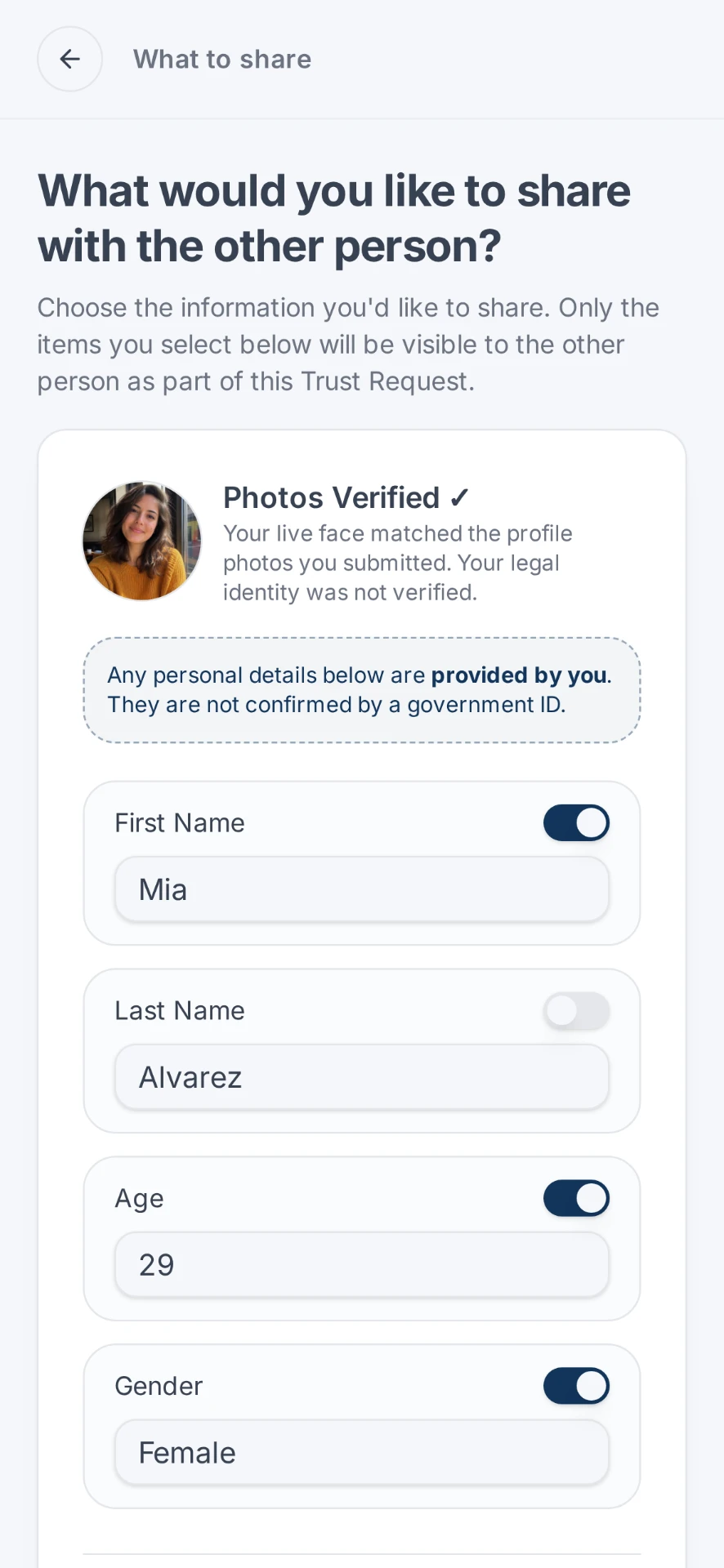
The sitter completes ID Verified: government-issued identity documentation plus a live face check, and chooses what to share back with you. They can ask you to verify too, if that helps them feel comfortable handing over their own details.
Then arrange the handover
With identity settled, the meet-and-greet is about your pet, the routine and the keys.
✓ Trust Established
Mia is now a NoStranger.
You can now view the information Mia has chosen to share.
★★★★★ IDENTITY VERIFIED
Mia Alvarez
Approx. connection location: Wellington, NZ
Age
29
Gender
Female
First name
Mia
Last name
Alvarez
Identity Verified
These details were verified from a government-issued ID and checked against authoritative records, with a live face check confirming the person completing the verification matches the ID.
You only see what they chose to share. This code can't be used again.
Privacy
Verify the sitter without publishing your life.
Only the match is shared. Your private information isn't. They don't see it. Neither do we.
Pet-sitting conversations already give away more than most: your address, your travel dates, and the fact that your house will be empty. A Trust Request does not add to that pile. The sitter chooses what goes into their side, and you see only what they chose to share.
Sitters get the same protection. Working independently should not mean sending copies of your passport to every household that asks.
More detail in our Privacy Policy.
When to use it
Typical pet-care moments
A new dog walker with a key
Daily walks while you're at work mean regular, unsupervised access to your home.
Holiday drop-in visits
Someone feeding a cat twice a day for two weeks, in an otherwise empty house.
Found in a neighbourhood group
A friendly offer in a local page, with no ratings, history or platform behind it.
A last-minute replacement
Your usual sitter cancels the day before you fly and a friend-of-a-friend steps in.
Boarding at their home
Your pet goes to an address you've only seen in photos, so you'd like to know who lives there.
Sitters protecting themselves
A sitter arriving alone at an unfamiliar house can ask the owner to verify in the same request.
Be clear
What a Trust Request settles before the keys change hands
It tells you who the person is. It cannot tell you how they'll care for your animal.
It can help you
- Establish that a live person completed the verification process.
- Confirm, with ID Verified, government-issued identity documentation plus a live face check, the level suited to handing over a key.
- Let the sitter verify without exchanging identity documents with you, and choose what to share back.
- Give you a verified identity before you decide about keys, codes and dates.
It doesn't
- Confirm pet-care experience, insurance, first-aid training or references.
- Predict how someone will treat your pet or your home.
- Guarantee anyone's safety or honesty.
- Replace a meet-and-greet, written instructions and a local contact who can check in.
FAQ
Pet sitting verification questions
How do I verify a pet sitter I found on a community page?
Send them a Trust Request before you arrange a meet-and-greet or hand over keys. Because a key is involved, ID Verified is the stronger option: they complete government-issued identity documentation plus the required live face check, choose what to share, and you see the result in the browser, usually within about 90 seconds.
What should I do before giving someone a key?
Establish their identity first with ID Verified, meet in person with your pet present, agree in writing what access is being given and for how long, and use a lockbox or a single key you can retrieve rather than a copy you cannot. Verification informs that decision; it does not remove the need to make it carefully.
Can dog walkers verify the owner too?
Yes, and many prefer to. A walker is also going alone to an unfamiliar address. A Trust Request works in both directions, so each side sees only what the other chose to share.
Does NoStrangers check whether someone is a good pet carer?
No. It does not verify experience, animal-handling skill, insurance, first-aid training, references or any qualification, and it cannot tell you how someone will treat your pet. ID Verified establishes who the person is, through government-issued identity documentation and a live face check, without either of you handing over ID documents.
Is this useful for booking-platform sitters?
Platforms differ in what they check and when. Even on a platform, the person who actually turns up is the one holding your key, and a Trust Request is a direct check between the two of you, independent of the booking.
What about a last-minute sitter?
Short notice is when checks usually get skipped. Because verification runs in the browser with no account or app download, it is realistic to do it the evening before a trip.
Does a completed Trust Request mean my home and pet are safe?
No. It gives you verified information about who you are dealing with, which helps you decide. It cannot guarantee safety, predict behaviour or replace a meet-and-greet, clear instructions and someone local who can check in.
Related use cases
Verify before you hand over the key.
About 90 seconds, days before you fly.