Childcare
Know exactly who you're inviting into your children's day.
Most family childcare is arranged privately: a local group post, a recommendation, a message thread. Before you meet a babysitter or nanny for the first time, send them an ID Verified Trust Request so you can find out who you're actually meeting, using government-issued identity documentation and a live face check, not just photos.
✓ Trust Established
Mia is now a NoStranger.
You can now view the information Mia has chosen to share.

★★★★★ IDENTITY VERIFIED
Mia Alvarez
Approx. connection location: Wellington, NZ
Age
29
Gender
Female
First name
Mia
Last name
Alvarez
Identity Verified
These details were verified from a government-issued ID and checked against authoritative records, with a live face check confirming the person completing the verification matches the ID.
You only see what they chose to share. This code can't be used again.
Context
A great deal of childcare happens outside any register
Two published findings on how families actually arrange care.
5.4%
of U.S. parents living with a child aged 17 or under reported child care provided by a nonrelative, and 21.8% reported care by a relative other than a parent. These are arrangements made privately rather than through a formal provider.
U.S. Census Bureau, Household Pulse Survey, Sept–Dec 202256,200 → 27,900
the fall in the number of Ofsted-registered childminders in England between 2013 and 2023, a 50% decline in registered supply over a decade, with 5,200 leaving the register in 2022–23 and 1,700 joining.
Ofsted, September 2023The gap
Establishing identity and background screening are not the same thing.
When a family finds a sitter through a community page or a friend of a friend, the first real question is simply factual: can this person establish who they are? Photos, a first name and a friendly message do not answer it.
That question matters most because everything else depends on it. References, a police or Working With Children check, a childcare qualification: all of them are attached to a name. If the name in front of you belongs to someone else, every other check you have done describes a different person.
NoStrangers deliberately does one part of this. ID Verified confirms government-issued identity documentation plus a live face check, without either of you exchanging ID documents. It does not perform criminal-history, child-safety, police or DBS checks, and it does not confirm qualifications, training or previous employment.
A Trust Request establishes identity, privately and between the two of you. Whatever screening your situation calls for remains a separate and necessary step.
How it works
How NoStrangers works when you're arranging childcare
Best used after the first messages and before you agree to meet.
Send a Trust Request
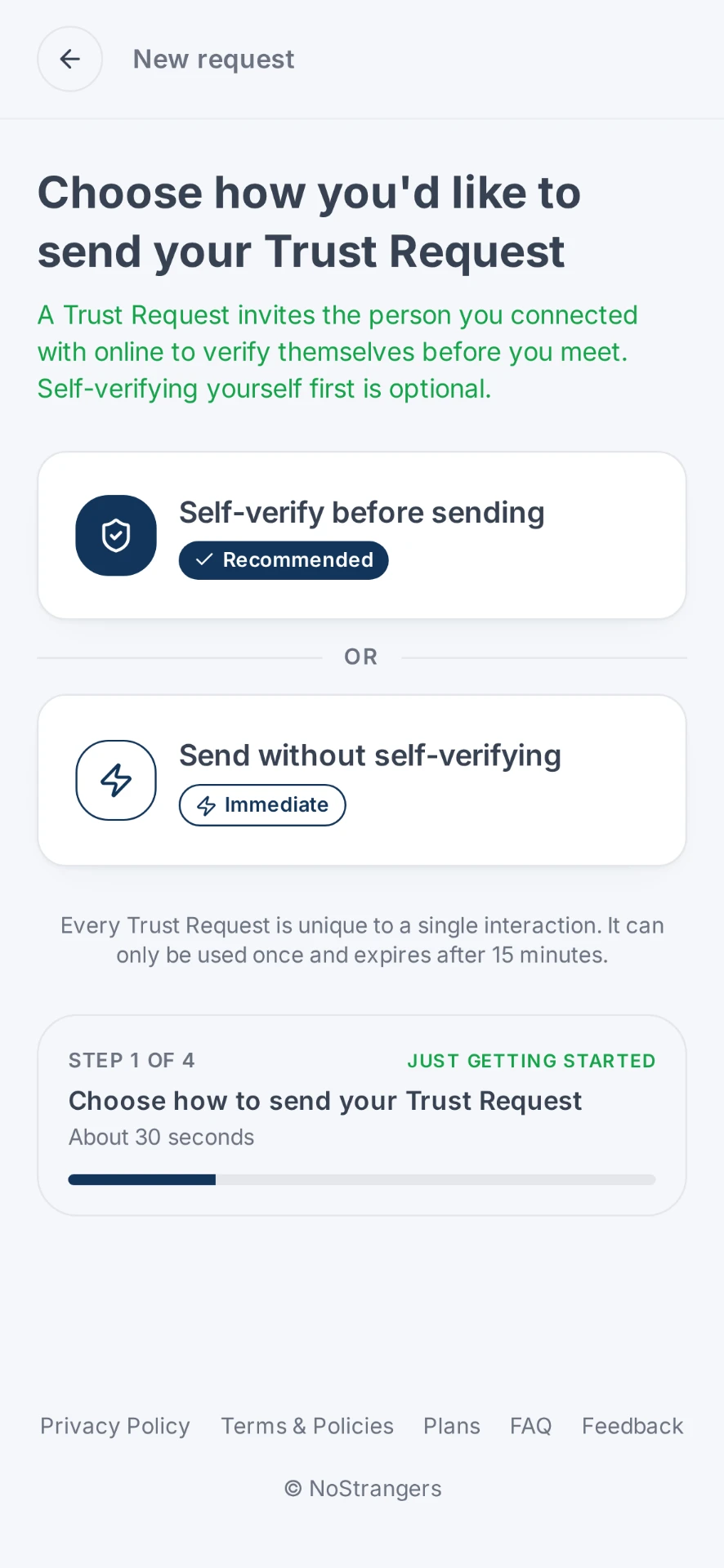
Generate a unique code and send it in the thread you're already using (a group message, a text or an email).
They verify themselves
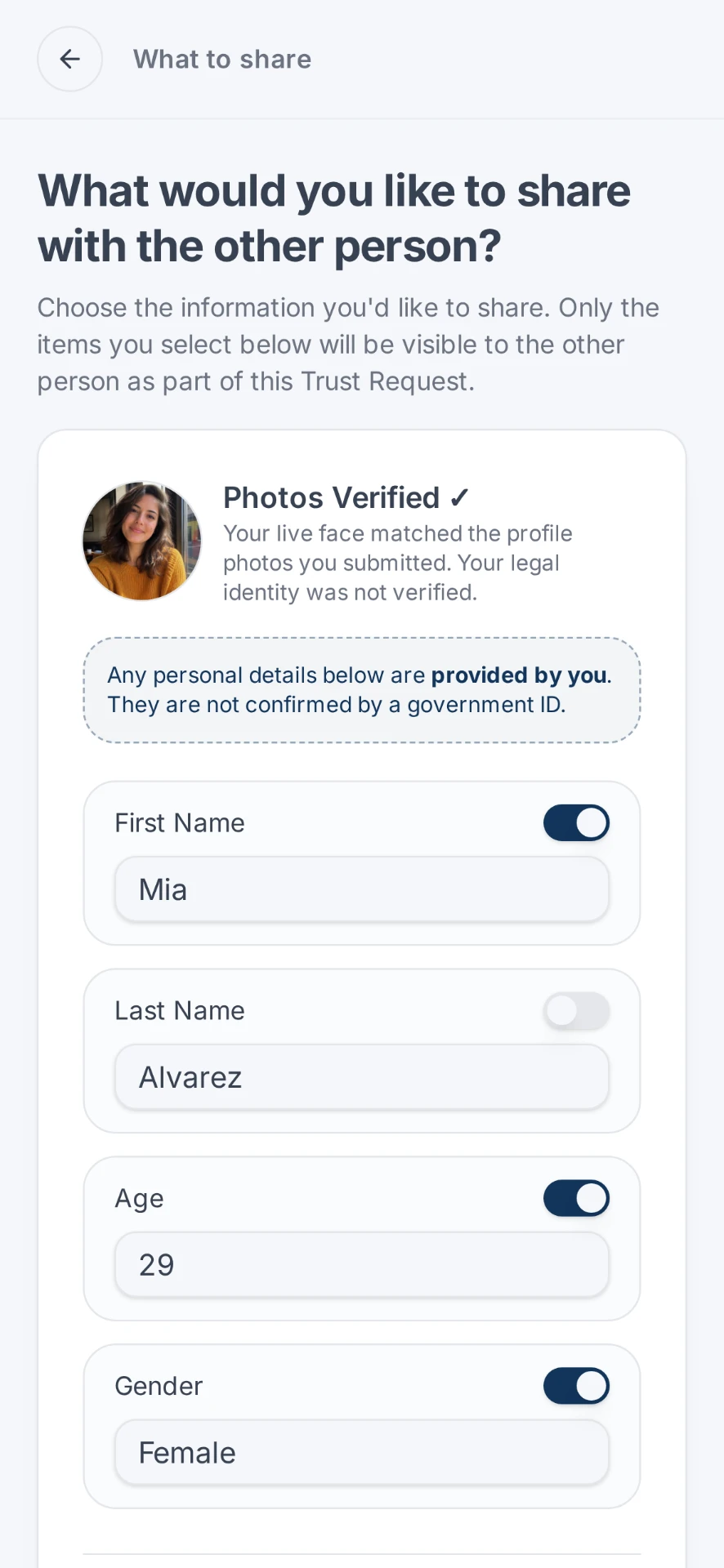
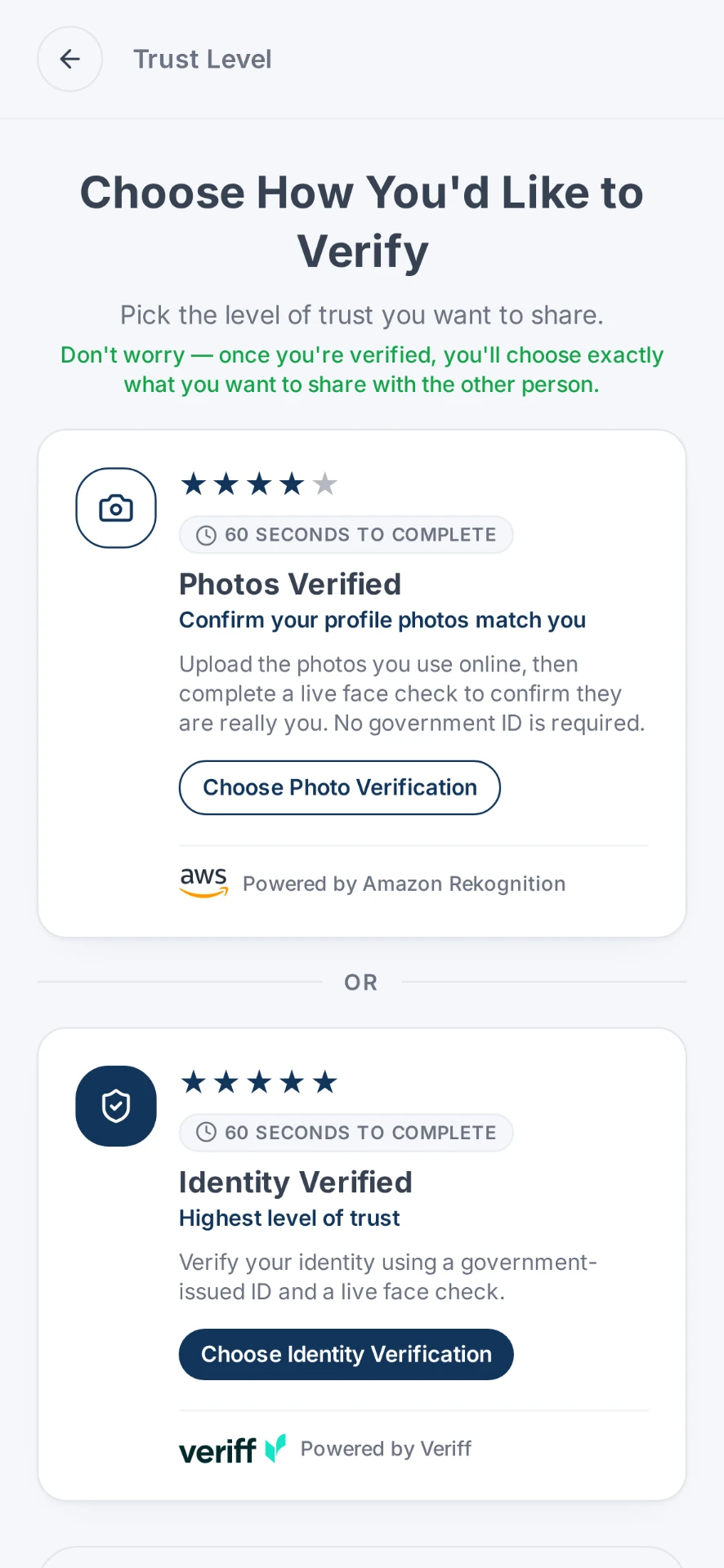
The sitter completes ID Verified: government-issued identity documentation plus a live face check, and chooses what to share back with you.
Meet knowing who you're meeting
You see the verification result, then use the first meeting for what it's really for: whether this person fits your family.
✓ Trust Established
Mia is now a NoStranger.
You can now view the information Mia has chosen to share.
★★★★★ IDENTITY VERIFIED
Mia Alvarez
Approx. connection location: Wellington, NZ
Age
29
Gender
Female
First name
Mia
Last name
Alvarez
Identity Verified
These details were verified from a government-issued ID and checked against authoritative records, with a live face check confirming the person completing the verification matches the ID.
You only see what they chose to share. This code can't be used again.
Privacy
Ask them to verify. Share only what you meant to.
Only the match is shared. Your private information isn't. They don't see it. Neither do we.
A family arranging care and a sitter starting a new job are both handing information to a stranger. The sitter chooses what goes into their side of the Trust Request, and you see only what they chose to share.
That is deliberately different from emailing a photo of a passport to someone you have never met, which leaves a copy of your identity document sitting in someone else's inbox indefinitely. Read the detail in our Privacy Policy.
More detail in our Privacy Policy.
When to use it
The moments families use it
A sitter found in a local online group
Someone has replied to your post or offered availability in a community page, and you have nothing to go on but a profile.
A first trial afternoon
Before a stranger arrives at your door for a trial session, you'd like the identity question settled in advance.
Occasional or last-minute care
A regular sitter cancels and a replacement is suggested. Verification is quick enough to do the same evening.
School pick-ups and hand-overs
You want to be confident about the identity of the adult collecting your child, and to give schools or other carers a name you have actually verified.
Sitters verifying the family
A sitter going to an unfamiliar address for the first time can ask for the same reassurance, in the same request.
Care arranged from a distance
You're organising care for a partner, a co-parent or a grandparent to supervise, and want the identity step done properly before anyone arrives.
Be clear
What a Trust Request can and cannot tell you about a carer
This is an identity step. It is not a safeguarding assessment.
It can help you
- Establish that a live person completed the verification process.
- Confirm, with ID Verified, government-issued identity documentation plus a live face check, so you know who you're actually inviting in.
- Give the name you'll use for references or any required screening a verified identity.
- Let the sitter verify without exchanging ID documents with you, and choose exactly what to share back.
It doesn't
- Perform criminal-history, police, child-safety, Working With Children or DBS checks.
- Confirm qualifications, first-aid training, references or employment history.
- Assess someone's character, competence or suitability to care for children.
- Guarantee anyone's safety or predict future behaviour.
FAQ
Childcare identity questions
How can I verify a babysitter I found in an online group?
Send them a Trust Request and ask for ID Verified before you arrange a meeting. They complete government-issued identity documentation plus the required live face check, and you see whether a live person matches the identity they provided. It takes about 90 seconds and works in the browser.
Is this a background check?
No, and it is important not to treat it as one. NoStrangers does not carry out criminal-history, police, child-safety, Working With Children or DBS checks, and does not confirm qualifications, references or employment history. It establishes identity. Any screening your country or situation requires is separate and still necessary.
What is the difference between ID Verified and background screening?
ID Verified answers 'can this person establish who they are?'. Background screening answers 'what does the official record say about that person?'. Establishing identity is the step that makes screening meaningful: a clean check on the wrong name tells you nothing, and ID Verified never involves swapping ID documents with the other person. NoStrangers does the first part only.
Should I ask a professional nanny agency candidate to verify too?
You can, though an agency will usually have done its own identity and screening work. A Trust Request is most useful for private arrangements: a sitter found through a local group, a friend of a friend, or someone replying to a post.
Will the sitter see my personal details?
The sitter chooses what to share back with you when they complete verification, and you see only that. You don't need to verify yourself for the request to work, though a sitter meeting a stranger at an unfamiliar address may ask you to verify too, and the same request supports that.
Do I need this if we're meeting in a café first?
A public first meeting is a good habit, and verification complements it. Knowing beforehand that the person you're meeting matches the photos and identity they presented online means the conversation can focus on whether they're right for your family.
Does a verified sitter mean my children are safe with them?
No. A Trust Request tells you a live person completed verification and how they compare to the identity used. It cannot assess someone's character, competence or intentions, and it cannot guarantee anyone's behaviour. Trial sessions, references, screening where required and your own judgement all still matter.
Related use cases
Settle the identity question before the first visit.
About 90 seconds each, so the meeting can be about everything that matters after that.