Buying & selling safety
How to stay safe on Facebook Marketplace
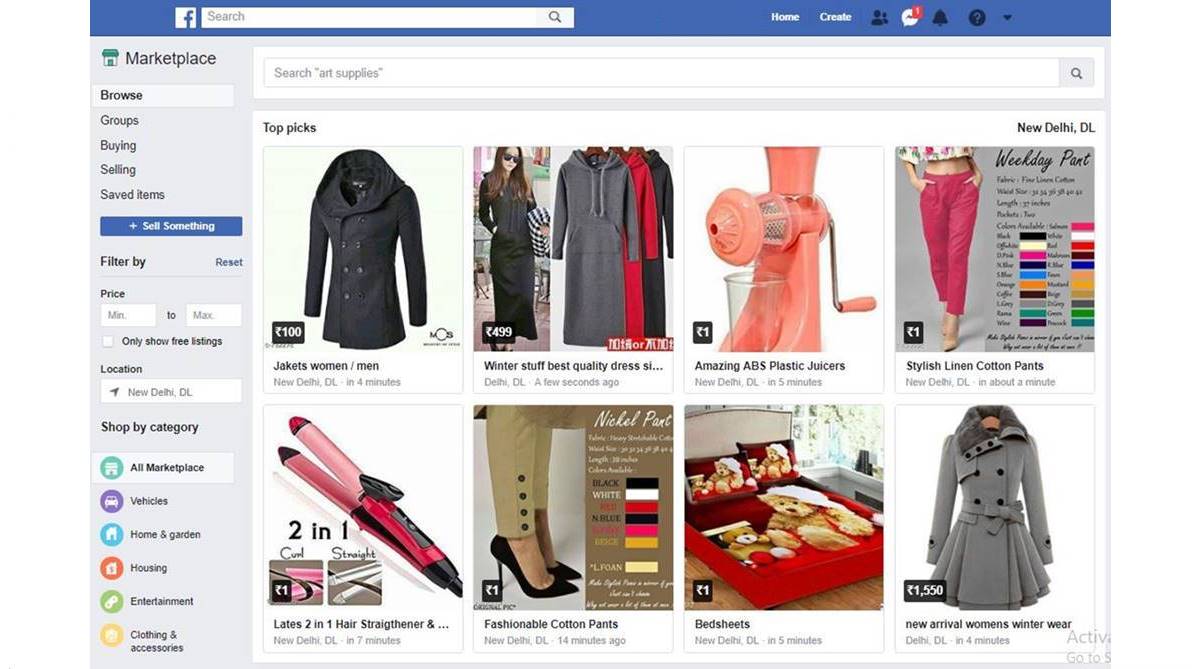
Buying or selling something through Facebook Marketplace often ends with two strangers meeting in person.
Sometimes that's in a public place. Sometimes you're collecting something from somebody's house. And if you're selling furniture, appliances or anything difficult to move, you may be giving a stranger your home address and inviting them onto your property.
Most Marketplace exchanges are completely ordinary. But there are a few sensible things you can do before handing over money, travelling somewhere unfamiliar or telling somebody where you live.
Look at who you're dealing with
A Marketplace profile can give you some useful context before you arrange a meeting.
Look at the account as a whole. Does it have some history? Does the name seem consistent with the person you're speaking to? Are there previous listings, ratings or other signs that the account has actually been used?
A new or private account isn't automatically suspicious. Plenty of genuine people have limited public profiles.
You're looking for things that don't add up, not trying to prove somebody is trustworthy from their Facebook account.
Keep the conversation on the platform at first
There usually isn't much reason to immediately move a Marketplace conversation somewhere else.
Keeping the early conversation in Marketplace gives you a record of what was discussed and keeps your phone number, email address and other contact details private until you decide you want to share them.
Be cautious if somebody is immediately pushing you onto another platform, sending unexpected links or asking for information that isn't necessary to complete the transaction.
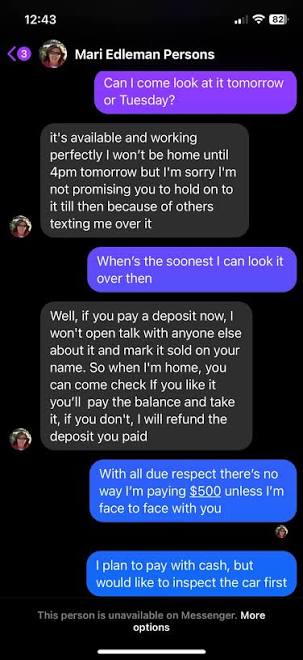
Be careful with payment
Don't let the pressure of somebody supposedly waiting, travelling or needing an item urgently rush you into accepting a payment you can't confirm.
Check that money has actually arrived through your own banking or payment service rather than relying on a screenshot, email or message supplied by the other person.
Be particularly cautious if somebody wants you to send money back, pay a fee to receive their payment, buy gift cards or transfer money outside the transaction.
If the payment arrangement suddenly becomes complicated, stop and work out why before handing anything over.
Think about where you meet
For smaller items, meeting somewhere public can be an easy option.
Choose somewhere populated and convenient where both people can arrive and leave independently.
Some communities also have designated safe exchange locations. Police stations, council facilities and other public locations are sometimes used for this purpose depending on where you live.
For larger items, meeting publicly may simply not be practical. A sofa or washing machine isn't going to a café.
That's when knowing a little more about the person coming to your property becomes particularly useful.

If someone is coming to your home
Selling from home changes the situation because you're giving somebody information you can't take back afterwards: where you live.
You don't need to be frightened of every buyer who comes to collect something. But it makes sense to think about the handover before they arrive.
Where possible, have the item ready near the entrance, garage or another suitable area so there is no reason for a buyer to move unnecessarily through your home.
If you're uncomfortable being there alone, arrange the pickup for a time when somebody else is home or let someone know who is coming and when.
You also don't need to give out your exact address at the beginning of the conversation. You can agree on the general area first and provide the collection address once the details are settled.

You can ask who is actually coming
If you're about to give somebody your home address, you may want more than a Marketplace profile.
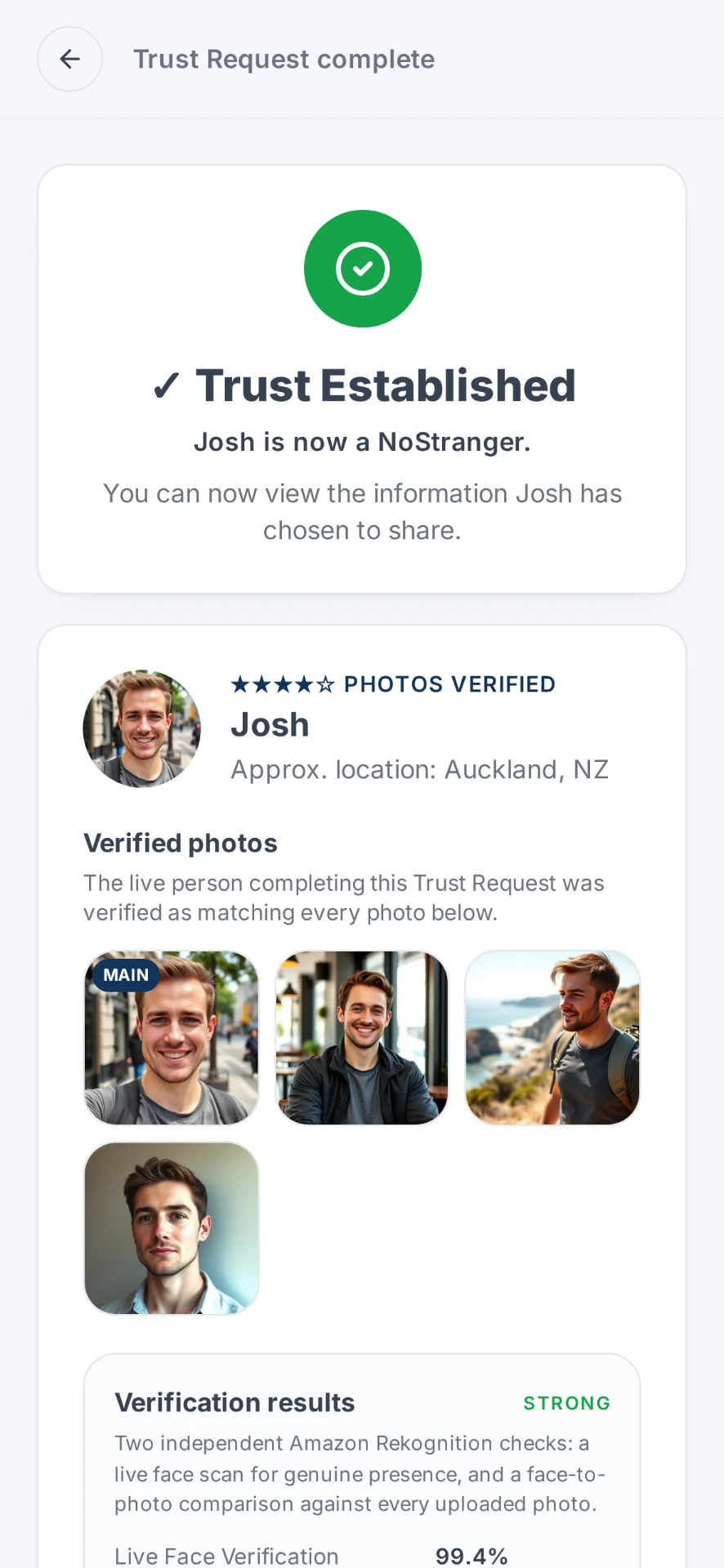
A NoStrangers Trust Request lets you ask the person you're dealing with to verify before the meeting.
They complete a live verification and choose what verified information they want to share with you. You can verify yourself too, so the buyer or seller can have the same reassurance about the person they're meeting.
It means neither person has to send identity documents or other sensitive information directly to the stranger on the other side of the transaction.
Verification doesn't guarantee somebody is safe or honest. It gives both people another piece of information before they meet.
If you're collecting from somebody else's home
The same basic considerations work in reverse.
Make sure somebody knows where you're going, particularly if you're travelling to an unfamiliar address.
If possible, arrange collection during daylight or at a reasonable hour. Keep control of your own transport and don't feel obligated to enter somebody's home if you aren't comfortable doing so.
For an item that needs to be inspected inside, take somebody with you if that makes sense.
If you arrive and the situation is substantially different from what was arranged, you can leave.

Watch for last-minute changes
A change of plan isn't automatically suspicious. People run late, addresses get mixed up and plans change.
What matters is whether the new situation still makes sense to you.
A different person arriving, a sudden change of address, being asked to meet somewhere isolated, unexpected payment arrangements or additional people appearing can all be reasons to reassess the transaction.
You don't have to continue simply because you've already travelled there.
Don't let the item make the decision for you
A great price can make people overlook things they normally wouldn't.
If you're buying something expensive, take enough time to check the item and the transaction properly before paying.
If you're selling, don't let somebody pressure you into handing an item over before you can independently confirm payment.
There will be other buyers and other listings.

What if something feels wrong?
Stop the transaction.
You can leave, ask the other person to leave, move to a public place or contact somebody you trust.
If somebody refuses to leave your property, threatens you, or you believe there is an immediate risk to your safety, contact the appropriate emergency service or police in your location.
You can also report suspicious accounts, listings or behaviour through Facebook Marketplace.
Marketplace safety doesn't need to be complicated
Most buying and selling between strangers works because both people want the same simple outcome: one person gets the item and the other gets paid.
A few precautions can help keep it that simple.
Know what you're buying or selling, confirm the payment yourself, think about where the exchange will happen and, when it matters, establish who you're actually meeting.
If a buyer or seller needs to come to your home, see is it safe to give someone you met online your address?
Real stories, cases and guidance
Reporting and official guidance from external publishers. Links open in a new tab.
New Zealand Police · 23 Jul 2026
Pair charged after Facebook Marketplace robbery
Two people charged after a robbery arranged through a Facebook Marketplace listing.
Read on New Zealand PoliceNew Zealand Police · 12 Dec 2025
Pair arrested following kidnapping and robbery
Police report arrests after a kidnapping and robbery linked to an online sale meeting.
Read on New Zealand PoliceRNZ · 29 Jan 2025
Warning over Facebook Marketplace deals issued after string of violent robberies
Police warn Marketplace users after a series of violent robberies at meet-ups.
Read on RNZNew Zealand Police · 17 Jun 2024
Police issue warning to Facebook marketplace users as man faces the Court
Police warn Marketplace users as a man appears in court over alleged offending.
Read on New Zealand PoliceNew Zealand Police · 5 Jun 2025
Alleged scammer arrested following $150k in thefts
An alleged online sales scammer is arrested after reported thefts totalling $150,000.
Read on New Zealand PoliceNew Zealand Police · 14 Oct 2021
Canterbury Police warn of Facebook Marketplace scam
Canterbury Police describe a Marketplace scam pattern and how to avoid it.
Read on New Zealand PoliceNew Zealand Police · 21 Jul 2025
Cha-ching: Police seize thousands of dollars in fake bills
Police seize counterfeit cash, a reminder to check payment carefully at handover.
Read on New Zealand PoliceNew Zealand Police · 14 Nov 2022
Legitimate bank transfer or not, can you tell the difference?
Police explain why sellers should confirm payment themselves rather than trust a screenshot.
Read on New Zealand PoliceNew Zealand Police · 18 Apr 2024
Beware of scammers offering shipping containers for sale
Police warn about fake online listings for high-value goods.
Read on New Zealand PoliceNew Zealand Police · 4 Dec 2024
Police urge online shoppers and sellers to be cautious ahead of Christmas
Seasonal advice for buyers and sellers arranging online marketplace deals.
Read on New Zealand Police